How direct-to-cell satellite internet technology works

Satellite can be used to power cellular backhaul for traditional towers by serving as a high-speed, low-latency link to provide connectivity in remote areas or locations hard to reach with a terrestrial fibre network.

Photo credit: Shutterstock

One of the world’s largest satellite internet providers, Starlink, recently signed a deal with Airtel Africa to introduce the American firm’s direct-to-cell (D2C) satellite technology to all of Airtel’s 14 African markets, including Kenya, in 2026.

This marks a major step in the continent’s telecommunications sector, where satellite technology has previously mainly been used to power internet providers’ cellular backhaul through traditional ground-based towers.
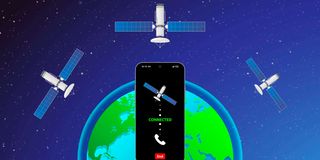
What is direct-to-cell?

D2C satellite technology enables standard smartphones to connect directly to satellites orbiting in space. The term is often used interchangeably with direct-to-device (D2D) technology, which makes smartphones and IoT (Internet of Things) devices, such as smart speakers and asset trackers, able to connect directly to satellites.

Both technologies aim to bypass terrestrial cell towers, but D2C focuses on cellular compatibility for phones while D2D covers a broad range of gadgets.

This technology comes in handy as a solution to so-called dead zones – areas without reliable internet connectivity due to geographical barriers, dense construction, infrastructure gaps, and government restrictions.

These include places such as remote locations, flights, and the sea, where other connectivity technologies like fibre optic and cellular do not reach.

How does D2C work?

Satellite internet companies use low-earth orbit (LEO) satellites around 550 kilometres up in space to beam high-speed, low-latency internet to a user's dish.

The satellites act as cell towers to provide internet coverage without terrestrial infrastructure, using existing cellular protocols like LTE and 5G.

The dishes, also called user terminals, communicate with nearby satellites and terrestrial ground stations connected to the internet.

With D2C, however, mobile phones and smart devices can directly connect to internet satellites in space, bypassing the traditional land-based cell towers.

Starlink, for example, says it operates over 8,000 LEO satellites, 650 of which are dedicated to D2C services. It is the world's largest D2C constellation that can deliver data, voice, video, and messaging to mobile dead zones across five continents.

How does satellite technology integrate with traditional network carriers?

Satellite can be used to power cellular backhaul for traditional towers by serving as a high-speed, low-latency link to provide connectivity in remote areas or locations hard to reach with a terrestrial fibre network.

Traditional cell towers are equipped with a satellite terminal, which transmits data directly to the LEO constellation. The constellation then routes it to the core network.

Safaricom’s parent company, Vodacom, in November 2025, signed an Africa-wide deal with Starlink’s parent SpaceX, which will see Kenya’s largest telco integrate such satellite backhaul.

With D2C, satellites equipped with cell tower technology called ‘eNodeB’ act as space-based cell towers, connecting directly to standard phones using existing 4G/LTE protocols. Ground stations link the satellite network to the traditional internet backbone, and phones recognise the satellite as another mobile network, similar to roaming.

Starlink’s deal with Airtel, announced in December 2025, will begin by delivering data that enables voice, video, and messaging, before advancing to high-speed broadband.

Are there specific hardware components needed to access D2C satellite internet?

No. One does not need special hardware, firmware, or mobile apps; the technology works on existing LTE-enabled phones to enable services like texting, calling, and data, even where no cell towers exist.

What are D2C’s main features and benefits?

Direct-to-cell satellite internet’s main advantage is its accessibility in remote, rural, or disaster-stricken areas that lack traditional network infrastructure. Remote workers or adventure-goers maintain communication without worrying about signal drop-offs.

For telcos such as Safaricom and Airtel, it enables them cover rural locations, the sea, or mountainous regions where the cost of building new traditional cell towers or laying fibre infrastructure is high.

What limitations does D2C technology have?

Despite their ability to bypass local terrestrial infrastructure, D2C internet services are still subject to local regulatory constraints within the countries they operate, and governments can force shutdowns, as seen with Starlink in Uganda during the just-concluded general elections.

Governments may also use specialised equipment to jam satellite signals, as reported in Iran amid the ongoing internet shutdown since January 8.

The service is also affected by environmental factors such as heavy rain or snow, which can weaken signals, reduce speeds, or cause intermittent, short-term service outages. Satellite internet’s ‘line-of-sight requirement’ also means it requires a direct, unobstructed view of the sky and might not work reliably indoors or underground.

How are telcos globally adopting satellite technology?

The US telco T-Mobile has partnered with SpaceX to launch a D2C service using Starlink's satellites to provide text, voice, and data in dead zones.

Another major US carrier, AT&T, is collaborating with the American satellite firm AST SpaceMobile to develop and deploy a space-based, D2C cellular broadband network.

Tech giant Apple has also invested $1.5 billion (about Sh193.5 billion) in another satellite firm, Globalstar, to boost its iPhones’ satellite capabilities beyond basic emergency SOS services.

PAYE Tax Calculator

Note: The results are not exact but very close to the actual.