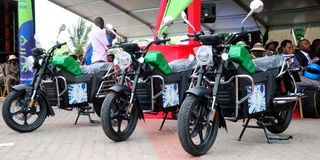
Electric motorcycle assembler Spiro has acquired UK engineering and design firm Coexlion for an undisclosed amount as the company plans to set up its first African research and development (R&D) centre in Nairobi.
A technology company’s R&D centre is an innovation hub where engineers, scientists and researchers develop new technologies, build prototypes and improve software and hardware products for commercial use.
Through the deal, Spiro seeks to boost its ability to design, develop and manufacture electric motorcycles tailored to African road conditions, rider usage patterns and customer requirements.
Kenya’s EV research and development remains limited despite the country’s growing electric vehicle adoption, driven largely by the electric motorcycle uptake.
The country remains primarily an assembly and testing hub, relying heavily on imported tech and technology transfers rather than original R&D.
Local ambition
“Our ambition is not only to manufacture in Africa, but also to progressively own and develop the engineering, design, and product capabilities behind our vehicles,” Spiro’s founder, Gagan Gupta, said in a statement.
Coexlion, which is registered in the UK and has operations in India and Kenya, specialises in electric two-wheelers, chassis and frame development, vehicle integration, reliability engineering, battery systems and industrial design.
The firm’s clients include Ather Energy and Ola Electric, two of India’s largest electric two-wheeler makers.
“Thanks to this acquisition, Spiro will soon open its first African R&D centre in Kenya,” Mr Gupta said. He did not provide further details on when the research centre will be built or the partners involved.
Local research and development helps technology companies accelerate product development cycles and improve component localisation.
Spiro said the acquisition would help it build most of its technology, design and manufacturing capability in-house and within Africa.
Founded in 2022, Spiro is a subsidiary of Dubai-based investment vehicle Equitane and has its operational headquarters in Nairobi.
The company operates in Kenya, Uganda, Rwanda, Nigeria, Togo and Benin, where most of its motorcycles are used commercially by taxi riders, commonly known as boda bodas.
The bikes are assembled from knockdown kits imported from China, with some spare parts sourced from India.
Its Nairobi assembly plant has an annual production capacity of up to 50,000 electric motorcycles.
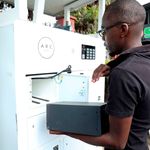
Spiro says it has more than 100,000 electric motorcycles on African roads and operates over 2,500 battery-swapping stations across its markets, making it the continent’s largest electric motorcycle provider.
Innovation gap
Data from the Electric Mobility Association of Kenya (EMAK) shows the country had 14,570 registered electric vehicles by the close of 2024, most of them electric motorcycles (8,097).
Still, Kenyan EV firms remain heavily reliant on imported technologies such as batteries and motors, primarily from China and other Asian markets.
This contrasts with more developed EV markets such as China, the US and the EU, which have dedicated labs and multi-university automotive research consortia developed in partnership with vehicle manufacturers.
Only a few vehicle companies in Kenya, such as Subaru and Spiro rival Arc Ride, have begun partnering with local universities to advance EV research and battery management systems.