Safaricom grip loosens as Airtel, Starlink gain ground in key segments

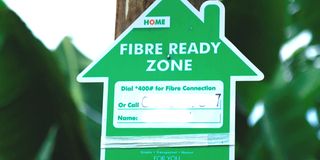
Safaricom signage for a home fibre area in Nyeri town. 

Photo credit: File | Nation Media Group

Safaricom is loosening its firm grip on Kenya’s most lucrative telecom segments, with fresh data showing a gradual erosion of its dominance in both mobile money and fixed internet as rivals ramp up competition.

The latest industry statistics from the Communications Authority of Kenya (CA) indicate that Airtel Kenya is steadily gaining traction in mobile financial services, chipping away at Safaricom’s long-held lead.
At the same time, Starlink and other internet service providers continue to expand their footprint in the home and enterprise internet market, offering an alternative to traditional fibre connections.

As of December 2025, M-Pesa’s share in the mobile money market had slimmed to 89 percent from 91 percent at the end of 2024, as Airtel Money raised its share from 8.9 percent to 11 percent. 

Airtel has over the last two years consistently eaten into Safaricom’s market share in the mobile money market, doubling its share from 5.5 percent in March 2024 to 11 percent by end of last year.

Mobile money has emerged as Safaricom’s top income earner, contributing about 41 percent, or Sh161 billion, of its Sh388 billion revenue in its last reported financial year which ended in March 2025.

Growing competition from Airtel threatens the segment, which is not just its most profitable, but also the fastest growing as traditional revenue earners like voice, data, and messaging slow down.

Yet, at the same time, its other fast-growing segment – fixed internet – is also facing increasing competition from new market entrants among them Starlink, which is fast expanding its market share in the country.

In the three months to December, Safaricom’s market share in the broadband market dipped slightly to 34.9 percent from 35.6 percent the previous quarter, even though it onboarded more users during the period.

Over the same period, Starlink increased its market share by a modest 0.1 percentage points to 0.9 percent, while Ahadi Wireless and Vilcom Network increased their penetration by 1.1 and 0.7 percentage points to nine percent and 5.4 percent respectively.

Alongside Safaricom, other dominant players like Jamii Telecomms, Wananchi Group, and Poa Internet also saw marginal losses in their market share in the broadband market, as small players advanced their shares.

Despite its losses in mobile money and broadband, Safaricom maintained a strong lead in voice, SMS, and mobile data markets, where it saw modest growth during the period.

Relatively weaker regulation in Kenya’s telecoms market, compared to neighbouring countries, has been blamed for the high cost of services like mobile data and calls.

In a report last year, the World Bank urged regulatory oversight and action to improve consumer welfare, noting that Kenyans are forced to pay relatively more for services than global or regional benchmarks.

Follow our WhatsApp channelfor the latest business and markets updates.

PAYE Tax Calculator

Note: The results are not exact but very close to the actual.