US tech giant Amazon has made a formal licensing bid to roll out satellite internet in Kenya, putting the world’s two richest men in a head-to-head fight for a share of the country’s internet market.
The Jeff Bezos-owned company has registered a Nairobi-based subsidiary, Amazon Kuiper Kenya Limited, which seeks a network facilities provider licence from the Communications Authority of Kenya (CA) to enter the local internet market.
The Kenyan outfit is part of Amazon Leo, the tech giant’s low-earth orbit (LEO) satellite broadband network, formerly Project Kuiper. Leo was launched to directly take on Elon Musk’s Starlink, which dominates the LEO marketplace, opening a new battle front between the billionaires in the race to provide high-speed internet
CA disclosures show that Amazon is seeking a Tier 2 licence, which the sector regulator grants firms using any technology to deploy communication infrastructure nationwide.
“The licences, if granted, will enable the applicants to operate and provide the services as indicated…,” the CA says in a Kenya Gazette notice.
“The grant of these licences may affect the public and local authorities, companies, persons or bodies of persons within the country.”
Kenya is among Amazon’s first African markets for the project, which aims to launch over 3,200 satellites by 2028. In January, the company acquired a licence to roll out satellite broadband service in Nigeria.
Amazon Leo aims to offer a “direct to device” service where data is transmitted without the need for a traditional mobile phone service by 2028.
Starlink has also inked deals with Airtel to allow for “direct to device” service once the partnership gets CA’s approval. Both firms will leverage their owners’ outsized wealth to gain market share.
Bezos, the fourth richest man with a fortune of $224 billion (Sh29 trillion), is both a latecomer and an underdog in the quest to fill the sky with satellites.
But the firm is committed to closing the gap with Starlink, which is galaxies ahead and is owned by the world's richest man with $839 billion (Sh109 trillion) in wealth.
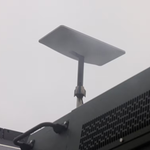
Amazon will sell satellite ‘dish’ antennas for its LEO internet in Kenya and will partner with traditional telcos seeking to integrate satellite technology for data relay into their mobile networks to expand coverage in rural areas.
Bezos' firm has signed a deal with UK-based Vodafone, the ultimate parent firm of Kenya’s largest telco, Safaricom, to connect Leo to 4G and 5G mobile masts in remote areas across Africa. Service trials are set to start this year.
The March deal mirrors a similar Africa-wide move that Starlink’s parent SpaceX made with Safaricom’s parent Vodacom in November.
“Vodafone will use Amazon Leo to connect geographically dispersed mobile base stations back to its core telecom networks in Germany and other European countries. Thereafter, Amazon Leo will be progressively rolled out across Africa through Vodacom,” Vodafone said in March.
“The companies expect the first of these mobile sites to be connected in 2026 and to extend this service as Amazon Leo builds out its constellation.”
To compete with the first mover, Amazon is dangling speeds double those of Starlink, which could shake up competition in Kenya’s internet market.
For a standard terminal, which Starlink offers download speeds of up to 150 megabits per second (Mbps), Amazon is promising up to 400 Mbps, while commercial kits, which the Musk-owned firm offers up to 400 Mbps, Bezos’s company says it is delivering a 1,280 Mbps download rate. The company has not provided pricing details yet.
The number of Kenyans using satellite internet has surged since Starlink entered Kenya in July 2023.
The company has been betting on lowering internet costs, including hardware acquisition and lease plans.
Safaricom is Kenya’s largest internet service provider (ISP) with a 34.9 percent market share, according to CA data. Starlink enjoys a first-mover advantage in Leo space and is the ninth-largest ISP overall, with a 0.9 percent share.
But telecoms experts have raised concerns over transmission from higher-power satellites, arguing it could result in harmful interference and impact the ground network services deployed by operators like Safaricom, Airtel and Telkom Kenya.
Transmission from the satellites creates increased noise levels that degrade the capacity of 3G, 4G and 5G networks, the analysts add, which is the backbone for delivery of high-speed internet services and voice.
Before the two firms made peace, Starlink emerged as a potential threat to Safaricom, which in 2024 petitioned the CA to withdraw the licence granted to the American tech giant, claiming it could facilitate illegal connections and disrupt mobile networks.
Airtel Africa also partnered with SpaceX last year to introduce Starlink's direct satellite-to-cell (D2C) connectivity to all its 14 markets, including Kenya, where it is Safaricom’s main competitor.
The CA has since authorised a pilot of the D2C service. Last month, Airtel reported that standard 4G smartphones with no terrestrial mobile signal successfully connected directly to Starlink’s LEO satellites during the pilot, supporting WhatsApp calling and messaging, maps, and financial transactions.