Airtel Africa has concluded tests on satellite-to-mobile connectivity in Kenya under its deal with Elon Musk's Starlink, ahead of a planned rollout of the technology in rural areas that lack traditional telecoms infrastructure coverage.
Airtel said that during the pilot run, standard 4G smartphones in remote locations with no terrestrial mobile signal successfully connected directly to Starlink’s assemblage of low-earth orbit satellites, giving users access to messaging and light data services without relying on ground-based network towers.
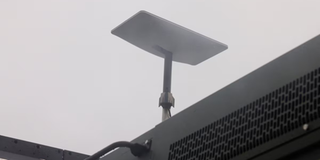
The system supported applications such as WhatsApp calling and messaging, maps, and Facebook Messenger, as well as financial transactions on Airtel Money, the telco said.
The service, also known as direct-to-cell (D2C), marks the first time in Kenya that a satellite operator is collaborating with a mobile phone network to provide telecommunications services from space.
“The testing was done in ‘no connectivity’ areas where terrestrial mobile networks did not have a signal. In these areas, Starlink Mobile was seamlessly activated, allowing 4G compatible smartphones access to Starlink’s constellation of 650 launched satellites to keep them connected,” Airtel said in a statement.
Airtel Africa last year partnered with Starlink’s parent firm, SpaceX, to roll out D2C technology to its 14 markets on the continent beginning this year.
Direct-to-cell (D2C) comes as a solution to so-called dead zones – areas without reliable internet connectivity due to geographical barriers, dense construction, infrastructure gaps, or government restrictions, such as remote locations, flights, and the sea – where other connectivity technologies like fibre optic and cellular fail to reach.
It works through satellites equipped with cell tower technology that act as space-based cell towers, connecting directly to standard phones using existing 4G or 3G protocols. Phones recognise the satellite as another mobile network, similar to roaming.
SpaceX says it operates over 8,000 low-Earth orbit satellites, 650 of which are dedicated to D2C services. It is the world's largest D2C constellation that can deliver data, voice, video, and messaging to mobile dead zones across five continents.
Airtel said that during the pilot run, standard 4G smartphones in remote locations with no terrestrial mobile signal successfully connected directly to Starlink’s assemblage of low-earth orbit satellites.
After the Kenya pilot, the first phase of the Airtel-Starlink deal is delivering internet calling and text messaging service. It will then advance to providing voice calls and high-speed broadband.
“The partners plan to launch voice calling and expanded data capabilities using Starlink Mobile V2 technology that will enable broadband directly to mobile phones,” Airtel said in the statement.
The roll-out is subject to approval by the Communications Authority of Kenya. Last month, the regulator told the Business Daily that it had begun a review of the service, looking to curb potential interference with mobile phone networks.
“The Authority and Airtel Networks Kenya Limited have had meetings to discuss the partnership. Airtel has submitted a formal application for consideration by the Authority, which is currently being reviewed,” the CA said via email then. A spokesperson for Airtel could not give an update on the talks.
Telecom operators have been partnering with satellite networks to complement existing mobile infrastructure, particularly in sparsely populated or hard-to-reach regions where building base stations is costly.
Safaricom’s South African parent company, Vodacom, signed an Africa-wide deal with SpaceX last November, which will see Kenya’s largest telco integrate Starlink's satellite technology for data relay into its mobile network.
In this case, traditional cell towers are equipped with a satellite terminal, which transmits data directly to the LEO constellation, which then routes it to the core network.
Africa’s largest telecoms operator, MTN, is also exploring partnerships with LEO satellite providers, while the US telcos T-Mobile and AT&T have partnered with SpaceX and AST SpaceMobile, respectively, to launch D2C service.