The High Court has suspended a Sh1.86 billion tender for the construction of a power line in Mombasa following questions on whether the network is owned by Kenya Power or the Kenya Electricity Transmission Company (Ketraco).
The court temporarily stopped Kenya Power from proceeding with the tender for the 132kV Kipevu-Mbaraki power line that was advertised last week.
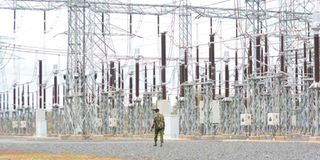
At the centre of the court dispute is whether the 132kV line is a high voltage and should be procured under Ketraco, or it is a mid or low-energy transmission network that should be handled by Kenya Power.
“Pending the inter-partes hearing and determination of the Petitioner/Applicant’s Notice of Motion Application dated 28/01/2026, a conservatory order be and is hereby issued prohibiting and restraining the 1st Respondent (Kenya Power) from entertaining, proceeding with and/or receiving bids from tenderers in respect of ... procurement of design, supply, installation and commissioning of 132kV Line at Kipevu- Mbaraki,” the court said.
The court directed the matter to be mentioned on February 17 for directions.
The Centre for Litigation Trust is behind the suit, and it reckons that the line is high voltage and falls under Ketraco in a tender that could pit two state agencies in a sibling war.
The NGO argues that Kenya Power’s work is to connect homes and businesses via mid and low energy transmission networks, with Ketraco dealing in high voltage lines.
The non-governmental organisation wants the court to declare the Kenya Power tender a breach of the law. In an affidavit, Julius Ogogoh, a director of Centre for Litigation Trust, says the mandate of Kenya Power and Ketraco on managing and ownership of power transmission lines are distinct and there is no overlap in the law.
He says Kenya Power has usurped and overstepped a mandate reserved in law for Kentraco.
Mr Ogogoh said a procurement process initiated by an entity lacking powers is not a curable irregularity.
“It is nullity ab initio, incapable of being salvaged by administrative convenience, sectoral expediency, or post-hoc rationalisation,” he said in an affidavit.
The petitioner added that equally troubling is the apparent abdication by Ketraco, the lawfully mandated entity, whose silence or inaction he said cannot legitimise an unlawful usurpation of its statutory role.
“As a regulatory body, the 3rd Respondent’s (Epra’s) silence in the matter as well is wanting as it shows abdication of regulatory duties and guidance in the energy sector and in this it is yoked together with the 4th Respondent (Ministry of Energy),” he said.
The petitioner said allowing the process to proceed would entrench a dangerous precedent of mandate erosion, institutional confusion, and procurement illegality, with serious implications for sector governance, public finance discipline, and system integrity.
Ketraco is revamping the transmission network while Kenya Power is upgrading the distribution network in a bid to lower the number of outages and low-quality electricity supply caused by the constrained network.
Electricity consumption is on the steady rise driven by increased economic activities and connections, which have exerted pressure on the ageing transmission and distribution network.
Enhancing the evacuation capacity by revamping the transmission grid is key to reducing blackouts caused by an overloaded network whenever there is a surge in electricity load.