Consumers kept in dark over tariff for new Sh40bn power lines

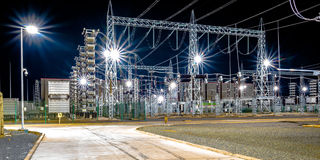
A Ketraco substation. Ketraco is mainly banking on the public-private partnership (PPP) model to fund most of the network upgrading works.

Photo credit: Pool

Kenyan authorities have failed to disclose the electricity tariff that consumers will pay for the two high-voltage lines to be built at a cost of Sh40.4 billion under a public-private partnership (PPP) to ease capacity hitches on the national grid and evacuate power to western Kenya.

Kenya Electricity Transmission Company (Ketraco) says that the energy regulator has already set a provisional tariff to help raise an estimated Sh5.6 billion every year as revenues for the project. The firm did not disclose the tariff for the project, which involves the construction of the 400 kilovolts (kV) Lessos-Lossuk line and the 220kV Kisumu-Kibos-Kakamega-Musaga line.
The PPP Act requires the relevant State entity to publish details of the PPP project, including the project tariff if applicable, in at least two national newspapers.

Key financial aspects of the project, including its total cost and source of funds, have already been made public. Once the two lines become operational, the consumer tariff will trigger a rise in electricity prices, underscoring why revealing it is key.

“The clearance to proceed and provisional tariff was issued by the regulator, Epra (Energy and Petroleum Regulatory Authority), on October 16, 2025,” Ketraco says in the project disclosures.

The project will be funded via a mix of debt and equity in a 77:23 ratio, with Africa50 providing 60 percent of the equity or Sh6.08 billion, and PowerGrid will foot the remainder.

The African Development Bank, the Dutch Entrepreneurial Development Bank and the Trade Development Bank are expected to provide the loans for the project.

Alain Ebobissé, the chief executive officer of Africa50, recently told this publication that they intend to negotiate the most favourable loan terms and agreement with the contractor to ensure the cheapest possible consumer tariff.

The two lines, spanning a combined total of 253 kilometres, will boost the evacuation of electricity from the Lake Turkana Wind Plant in Marsabit County to western Kenya, helping to cut outages caused by the ageing grid.

Enhancing the evacuation capacity by revamping the transmission grid is key to reducing blackouts caused by an overloaded network whenever there is a surge in electricity load.

Africa50 and PowerGrid will own, operate and maintain the lines and the substations for 30 years, allowing them to recoup their investment before handing back the infrastructure to Ketraco.

Kenya currently uses a mix of taxes and loans to build the transmission lines. Kenya Power then pays Ketraco a wheeling charge for the high-voltage lines at a rate of Sh0.82 per kilowatt-hour of electricity consumed by homes and businesses.

Ketraco turned to the PPP model to revamp the ageing transmission network amid budgetary constraints that have made it difficult for the Exchequer to fund capital-intensive projects such as high-voltage lines.

This is the first PPP-funded construction project for transmission lines as Ketraco seeks to plug a financial gap of $4 billion (Sh515.6 billion at current exchange rates) in the network upgrade.

Ketraco is fast-tracking the construction of another four high-voltage lines via the PPP model, at a total cost of $245.93 million (Sh31.7 billion).

These are the 132kV Kipevu-Mbaraki, the 220kV Kiambere-Maua-Isiolo, a 132kV line from Meru to Maua and a 220kV Kwale-Shimoni line.

Follow our WhatsApp channel for the latest business and markets updates. 

PAYE Tax Calculator

Note: The results are not exact but very close to the actual.