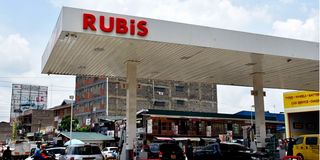
Rubis Energy Kenya lost the largest market share among oil marketing companies (OMCs) in the six months to December 2025, as the dominance of the three leading multinationals dropped below the 50 percent mark.
An analysis of industry data shows that Rubis’ market share fell to 13.77 percent in the review period from 15.43 percent a year earlier, while that of TotalEnergies Marketing Kenya edged down to 14.01 percent from 14.84 percent.
TotalEnergies is now the second-largest oil marketer behind Vivo Energy, whose market share slipped slightly to 20.56 percent from 20.8 percent. The combined share of the three fell to 48.34 percent from 51.07 percent.
The drop in their combined dominance signals improving fortunes for local oil marketers, led by firms such as Be Energy, Galana and Hass Petroleum.
“This value (Herfindahl–Hirschman Index of 0.0908) indicates healthy competition in the sector since none of the OMCs has significant market dominance. Additionally, it signifies market share redistribution from the dominant players,” the Energy and Petroleum Regulatory Authority (Epra) said.
The Herfindahl–Hirschman Index measures market concentration by squaring the market share of each firm and aggregating the results.
Hass Petroleum is the leading locally owned OMC with a market share of 3.41 percent, followed by Galana Energies at 3.22 percent and Be Energy at 3.17 percent. Be Energy is owned by the family of the late politician Raila Odinga.
Vivo, TotalEnergies and Rubis have for years controlled more than half of Kenya’s petrol, diesel and kerosene market.
The cash-rich multinationals have cemented this dominance by expanding their footprint across major cities and key highways, giving them an edge over local OMCs with relatively smaller financial muscle.
Local players are now betting on increased fuel consumption at their outlets to further chip away at the dominance of Vivo, TotalEnergies and Rubis.
Diesel consumption grew by 10.2 percent to 2.42 million tonnes last year from 2.19 million tonnes in 2024, while petrol consumption rose by 12.5 percent to 1.66 million tonnes from 1.47 million tonnes.
However, anticipated higher prices of diesel, petrol and kerosene could dampen demand in the coming months and weigh on sales growth for OMCs.
Fuel prices are expected to rise from April 15, reflecting the global surge in oil prices due to supply disruptions linked to the US-Israel war on Iran. Government subsidies or tax reductions could, however, cushion the increase.