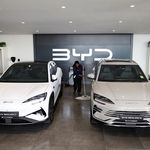
Chinese-backed electric carmakers and their local partners have begun setting up assembly lines in Kenya, marking a quiet shift as they bet on local production and tax breaks to boost the competitiveness of battery-powered cars in a market dominated by imported used internal combustion engine (ICE) vehicles.
Kenya’s green mobility push has long been dominated by motorcycles and buses, with passenger cars largely sidelined by high upfront costs and limited incentives.
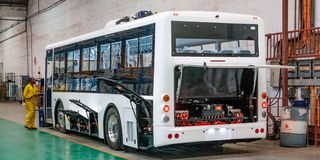
This week, Rideence Africa, a Chinese-owned EV dealer that has been selling Beijing Henrey’s small Xiaohu electric cars in Kenya since late 2023, announced a Sh320 million investment to assemble electric vehicles in Mombasa. The firm has inked a deal with Associated Vehicle Assemblers (AVA), one of the country’s largest contract assemblers.
Rideence plans to assemble electric hatchbacks from completely knocked-down (CKD) kits supplied by Beijing Henrey, alongside 16-seater electric vans from the Chinese commercial vehicle company Jiangsu Joylong. The first 132 cars and 20 vans are expected to roll off the line by the end of February.
Its cars currently sell for between Sh2.5 million and Sh2.8 million, with driving ranges of 200 km and 285 kilometres, respectively. By assembling locally rather than importing fully built units, the company expects to reduce vehicle prices by as much as 25 percent, primarily by leveraging tax incentives for assemblers.
"We will be assembling between five and 10 vehicles a day at the Mombasa facility," the company told the Business Daily.
In December 2025, Dongfeng — one of China’s largest automakers — announced it would begin assembling passenger electric cars locally in the first quarter of 2026, also in partnership with AVA. Working with local distributor ePureMotion, Dongfeng plans to roll out the ePureCitie compact hatchback in two trims, priced at Sh4 million and Sh4.5 million, with ranges of 330 km and 430 km, respectively.
The company has said it will follow up with additional passenger and light commercial EVs targeting private buyers, fleets, logistics firms and public-sector users.
Driving the market
Another entrant is Tad Motors, which in November 2025launched sales of five electric car models assembled in Kenya using Chinese-sourced parts. Operating from the Naivasha Special Economic Zone (SEZ), Tad Motors has invested about $10 million (Sh1.3 billion) so far and plans to ramp up production to 3,000 cars a year.
Its line-up includes two SUVs and three sedans priced between Sh1.3 million and Sh2.6 million, all with a range of about 250 kilometres. The company, owned by Ethiopian-born Dutch businessman Tadesse Tessema, says it works with more than 30 Chinese original equipment manufacturers.
He has said they aim to source more than 80 percent of components locally by next year, selling 80 percent of output across the East African market and 20 percent internationally.
“We're going to control the market, especially when we begin local manufacturing,” Tessema told the Business Daily in November 2025. “Our idea is to make EVs affordable to 'normal' people.”
Slow traction
Electric vehicle assemblers in Kenya are exempt from the 35 percent import duty charged on fully built vehicles, enjoy lower import declaration fees and Railway Development Levy rates on CKD parts, and benefit from a reduced excise duty of 10 percent and zero-rated value-added tax (VAT) on EVs. Together, these incentives can shave millions of shillings off the units’ final retail price.
Neta V electric vehicles at Moja EV Kenya Limited offices in Nairobi.
Photo credit: Billy Ogada I Nation Media Group
Yet electric cars have struggled to gain traction compared with e-motorcycles and buses. At the end of 2024, Kenya had 9,144 registered EVs, according to data from the Electric Mobility Association of Kenya (EMAK). E-motorcycles and bicycles dominate the sector, comprising 90 percent of the EV market. Out of the 14,750 EVs registered in the country between 2018 and 2024, only 326 were passenger cars.
“The commercial aspect has favoured two-wheelers and buses,” said Warren Ondanje, managing director of the Africa E-Mobility Alliance, in an interview with the Business Daily.
Motorcycles are income-generating boda boda assets, while buses serve public transport routes, making their economics clearer. Passenger cars, by contrast, compete against a vast pool of cheaper second-hand imports.
At the same time, the Kenya Revenue Authority (KRA) applies a depreciation schedule based on a car’s age to the retail selling price to calculate import taxes.
Depreciation rates range from five percent for cars less than a year old to 65 percent for those between seven and eight years old. This is applied to the vehicle’s original value, with older cars having higher depreciation and lower taxes. Because electric cars are mostly new, they attract higher taxes than older petrol vehicles, pushing prices beyond the reach of many buyers.
“As it stands, there is less incentive for someone to switch from an ICE car to an EV,” said Moses Nderitu, EMAK’s vice president and the managing director of electric bus maker BasiGo in Kenya.
Local assembly, Mr Ondanje added, could significantly lower prices and stimulate demand, especially as industry groups lobby for further duty reductions on electric vehicles.
Weak link
Charging remains another weak link. Kenya had approximately 300 EV charging facilities—including battery swapping stations and charging points—at the end of 2024.
Apart from e-bus makers, most companies rely on AC home charging, which is slower and best suited for overnight use, compared with larger, faster DC chargers at public locations.
Rideence, for instance, operates just over 16 charging stations across several counties and plans to scale this to 100 by the end of 2026, mainly to support electric vans. Tad Motors does not plan to build chargers; instead, it sells cars with onboard AC chargers compatible with regular wall sockets.
Dongfeng sells its cars with onboard chargers and offers faster DC chargers at an extra cost, while slowly expanding a small public network of its four current charging points in Nairobi.
An electric vehicle is plugged into a charging station in TJ&U garage in Nairobi, Kenya on May 24, 2023.
Photo credit: File | Nation Media Group
Analysts see the clustering of Chinese EV assemblers as a sign that Kenya could emerge as a regional hub for affordable electric cars, much as it has for buses and motorcycles.
This, however, would require more tax incentives and favourable policies to make electric cars more competitive, demonstrate the existence of a mass market, and unlock further investment in assembly and charging infrastructure.
“It’s about scale,” said Mr Nderitu. “A few EV units cannot compete against the thousands of cheaper, used ICE imports.”