EV power use nearly triples on accelerating shift to e-mobility

The growth in electricity demand mirrors a broader rise in EV registrations across the country.

Photo credit: Shutterstock

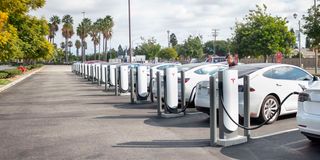
Electricity consumption linked to charging electric vehicles (EVs) in Kenya nearly tripled during the year to December 2025, signalling a rapid rise in e-mobility adoption and a growing new demand segment for the national power utility.

Data from Kenya Power shows that 8.43 million kilowatt-hours (kWh) of electricity were consumed towards charging EVs (motorcycles, passenger cars and buses) in 2025, up from 2.92 million kWh in 2024, marking a 188 percent increase.
According to the listed power utility, the surge in consumption translated into higher revenues from the e-mobility customer category rising to Sh190.8 million up from Sh64.8 million in 2024.

The Sh125.96 million revenue increase highlights electric mobility as an emerging contributor to Kenya Power’s revenue base, albeit from a low base.

Kenya Power Managing Director Joseph Siror said the growth reflects the company’s push to support cleaner transport under its broader green energy strategy.

“E-mobility is one of the key areas the company is focused on under our green agenda, which seeks to power livelihoods and support our communities with solutions that reduce carbon emissions. Already, over 90 percent of the energy we procure and dispatch is sourced from renewable sources,” said Siror.

The rise in EV charging demand has coincided with key policy changes aimed at accelerating the transition away from internal combustion engines.

Earlier this month, the government launched the National Electric Mobility Policy aimed at providing a regulatory and fiscal framework to support faster EV adoption across the country.

Previously, a prime intervention has been the introduction of a dedicated e-mobility electricity tariff, which was gazetted by the Energy and Petroleum Regulatory Authority (Epra) in March 2023.

Under the tariff, EV charging customers are billed Sh16 per unit during peak hours and Sh8 per unit during off-peak periods, creating an incentive to shift charging to low-demand hours.

Kenya Power says that as at the end of 2025, a total of 205 customers had been onboarded onto the e-mobility tariff, including charging station operators, fleet owners, as well as corporate users.

The firm has also begun deploying charging infrastructure within its own facilities to support both internal fleet electrification and public access.

Beyond powering vehicles, the chargers are also being used to collect data on charging patterns, load requirements and usage behaviour.

The growth in electricity demand mirrors a broader rise in EV registrations across the country.

By the end of 2025, Kenya had cumulatively registered more than 35,000 electric vehicles, the majority of them two-wheelers used in urban transport and delivery services.

Motorcycles and bicycles have emerged as the entry point for electric mobility due to lower costs, shorter charging times and suitability for last-mile transport.

Kenya is keen to encourage the use of EVs and vehicles that are powered by liquefied petroleum gas (LPG) as part of the global efforts to reduce carbon emissions caused by the use of diesel and petrol.

The government has set an ambitious target to have EVs form at least five percent of all newly registered vehicles by 2030.

Follow our WhatsApp channel for the latest business and markets updates.

PAYE Tax Calculator

Note: The results are not exact but very close to the actual.