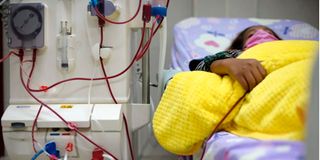
Kidney patients will start paying less for dialysis treatment after the government removed a 16 percent value-added tax (VAT) on dialysers—the filters used to clean blood during haemodialysis sessions.
The Finance Act 2026, signed into law by President William Ruto last week, exempts dialysers from VAT with effect from July 1, offering some relief to the thousands of patients for whom the cost of staying alive has risen sharply over the past three years.
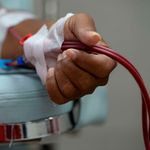
Dialysers are single-use filtration devices that are inserted into a dialysis machine at each session to remove waste products, excess fluid and toxins from the blood of patients whose kidneys can no longer perform this function. They cannot be reused, so a new one is required for every session.
Over the past three years, the cost of dialysis consumables, including dialysers, has increased by 30 percent, driven by the introduction of VAT on previously exempt medical supplies and the imposition of import duty on items that previously entered the country tax-free.
VAT on dialysis was introduced through the 2023 Finance Act, which took effect on July 1, 2023.
A dialyser that cost around Sh800 three years ago now sells for up to Sh1,100, pushing up treatment costs as hospitals pass the higher price on to patients.
For example, a dialysis session at Aga Khan University Hospital (AKUH) costs Sh13,000, of which the government, through the Social Health Authority (SHA), pays Sh11,650. This leaves a balance of Sh1,350 for the patient to cover per session.
On the standard twice-weekly schedule, the shortfall amounts to over Sh140,000 per patient per year, excluding transport, medication and clinical reviews.
SHA usually covers two sessions per week, with an additional session permitted upon specialist recommendation. Patients pay for two sessions per week, typically around Sh2,700 per week, or Sh10,800 per month. Those requiring three sessions pay around Sh16,200 per month.
"The increase is real and affects every item we use. Some items have more than doubled in price,” said Dr Hussein Bagha, a consultant nephrologist at MP Shah Hospital.
The Kenya Renal Association estimates that around four million Kenyans are currently living with kidney disease, a figure which is expected to rise to 4.8 million by 2030. The prevalence of chronic kidney disease in Kenya is estimated at four percent of the population.
Meanwhile, over 8,000 patients are on dialysis, despite an estimated need for 15,000