Pain as dialysis consumables prices up by 30 percent

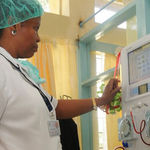
 A patient undergoing dialysis. 

Photo credit: Reuters

The cost of dialysis consumables has increased by an average of 30 percent over the past three years, putting additional strain on the healthcare sector and raising the cost of care for patients.

Renal care providers link the increase to a weakening shilling, the introduction of value-added tax (VAT) on previously exempt medical supplies, and imposition of import duty on items that previously entered the country tax-free.
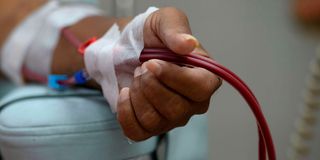
These consumables are single-use items required for every dialysis session, including dialyser filters, bloodlines, bicarbonate cartridges, and fistula needles.

Hussein Bagha, a consultant physician and nephrologist at MP Shah Hospital in Nairobi, noted that the cost of a dialyser filter has increased from around Sh800 to up to Sh1,100 over the past three years.

Market data shows that bloodlines now cost between Sh900 and Sh1,300, a disposable haemodialysis catheter kit costs around Sh4,500, while IV cannulas cost between Sh1,470 and Sh1,990.

"The increase is real and affects every item we use," said Dr Bagha. "Some items have more than doubled in price. Three years ago, we could budget with some confidence because the shilling was stronger against the dollar. As they are not optional, we absorb what we can and pass on what we cannot.”

According to Ahmed Sokwala, head of the dialysis unit at Aga Khan University Hospital (AKUH), the combined effect of taxes and reimbursement gaps is undermining the viability of dialysis services.

“Dialysis is not optional. Yet providers are taxed on essential consumables and reimbursed below cost. That gap is now too wide to absorb. This is no longer a temporary shock; it is the operating environment. Centres that cannot sustain the losses will close or reduce capacity, leaving patients with limited options," said Dr Sokwala.

The suppliers also confirm the price increases are linked to tax changes and currency fluctuations.

“These products were exempt for a reason—they are life-sustaining, not discretionary. When VAT and import duty were introduced without transitional relief or adjustments to reimbursement rates, the cost was passed on through the supply chain to patients," said Peter Waweru of Allmed Medical Supplies.

“Dialysis consumables that were previously zero-rated or exempt under the VAT Act have progressively moved into the standard 16 percent VAT bracket, particularly since 2022. The cost is passed down to providers and ultimately to patients.”

Kenya currently has over 8,000 patients on dialysis.

He added that import duty has added further pressure, whereby products that were previously admitted under concessionary or duty-free terms, including dialysers and bloodlines, now attract rates of between 10 percent and 25 percent, depending on their classification.

Suppliers also report inconsistent application at the port of entry, with identical products sometimes being assigned different duty rates, which complicates procurement and pricing.

Kenya imports all dialysis consumables, mainly from China, Japan, and India, which exposes the sector to exchange rate volatility. The Kenyan shilling averaged at 117 per dollar in 2022, depreciating to 140 in 2023 and peaking at 160 in January 2024—a depreciation of around 37 percent over two years. Currently, the shilling stands at 129.53 per dollar.

Meanwhile, a dialysis session at AKUH costs around Sh13,000. The Social Health Authority (SHA) reimburses Sh11,650 per session, leaving patients to pay a Sh1,350 co-payment.

SHA usually covers two sessions per week, with an additional session permitted on specialist recommendation. Patients paying for two sessions per week typically pay around Sh2,700 per week or Sh10,800 per month. Those requiring three sessions pay approximately Sh16,200 per month.

However, the healthcare providers noted that SHA's delayed reimbursements are adding to the strain. Although the SHA disbursed approximately Sh11.1 billion last month to settle approved total claims, providers claim that this is insufficient.

“Hospitals pay suppliers upfront, while reimbursements remain inconsistent and delayed,” said Dr Sokwala.

, despite an estimated need for 15,000. The demand is expected to grow as cases of chronic kidney disease increase.

Although kidney transplants offer a long-term cost-saving alternative, the high upfront costs and limited insurance coverage for post-transplant care remain a challenge for many.

PAYE Tax Calculator

Note: The results are not exact but very close to the actual.