Telkom Kenya has blamed the sharp decline in its customer base on a protracted shareholder transition that has disrupted its business strategy and funding for key programmes, including network upgrades.
“Over the last two and a half years, Telkom has been going through a protracted shareholder transition that has resulted in the company’s inability to meet some of its strategic imperatives, regrettably affecting the optimal running of its network,” the firm said in an emailed response to the Business Daily.
“It is envisaged that once the shareholder transition process is complete, the company will have access to the needed funding and resources to expedite its corporate strategy, resume optimal service provision to our customers, and further enhance our overall value proposition through network expansion,” Telkom added.
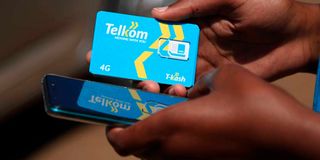
Telkom Kenya has lost a significant subscription base in recent years. In the six months to December 2024, for instance, Telkom shed a total of 312,676 active mobile SIM subscribers, a decline of 21.1 percent and extending a trend observed during the year to June 2024, when the firm lost over one million customers.
Telkom had earlier suffered a loss of up to 899,458 customers in the year ended June 2023.
Dramatic twists and turns
The firm’s shareholding transition has seen a number of dramatic twists and turns, the latest of which was a Cabinet directive in October 2023 to rescind a decision to buy back the majority stake in Telkom Kenya from Jamhuri Holdings Limited, a subsidiary of London-based private firm Helios Investment Partners.
The development came after a parliamentary inquiry found that the government’s Sh6 billion buyout of Helios, which took place days before the 2022 general election, was unprocedural.
Hours after the Cabinet resolution, the National Treasury announced that it had settled on Emirati-based Infrastructure Corporation of Africa LLC (ICA) as the majority shareholder in Telkom Kenya following a competitive process that had started in January 2023.
Treasury had withdrawn Sh6.09 billion on August 5, 2022, and paid the Helios subsidiary in a transaction that failed to obtain parliamentary approval.
The ICA deal therefore meant that Helios would be forced to refund the Kenyan government the amount and then directly sell its 60 percent stake to the UAE firm, allowing the government to avoid the technicalities of selling Telkom as a State parastatal.
Telkom’s subscriber woes also date back to early April 2022, when the Communications Authority of Kenya (CA) started switching off SIM cards that were not regularly registered, an exercise undertaken by the government since 2013.
In the drive, telcos were required to re-register their subscribers by updating their details with a digital passport-size photo of the customers.
The regulator said at the time that irregularly registered SIM cards were being used to perpetuate crime, including money laundering, kidnapping, malicious calls, cybercrime and mobile money fraud.