Regional low-cost carrier Jambojet is pursuing an ambitious growth agenda as it navigates operational headwinds and shifting market dynamics. Despite challenges such as aircraft groundings and delayed engine deliveries that constrained capacity, the airline is positioning itself for recovery and expansion, underpinned by steady revenue growth and resilient passenger demand.
In this interview, Chief Executive Officer Karanja Ndegwa discusses the airline’s strategy for scaling operations, managing seasonal demand, improving on-time performance and steering the low-cost carrier towards sustainable growth in a dynamic aviation environment.
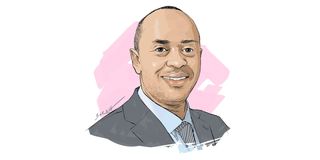
Jambojet is planning a massive expansion, how has it performed over the last two years?
In 2024, we recorded revenue of Sh13.6 billion and carried 1.257 million passengers.
In 2025, revenue grew to Sh14.4 billion, while passenger numbers remained relatively stable at about 1.2 million. Our initial target was 1.5 million passengers, but we faced operational challenges, including one aircraft being grounded due to delayed engine overhauls and difficulties in sourcing leased engines.
These issues have since been largely resolved. For 2026, we are targeting Sh17.2 billion in revenue and 1.5 million passengers. The first quarter is ahead of last year’s performance but about 2 percent behind budget due to the late arrival of the new aircraft, which we expect to recover as the year progresses.
With the addition of a new aircraft and more expected, how will your capacity and operations change?
Currently, we operate about 202 return flights per week. The additional aircraft will allow us to add approximately 22 weekly flights, translating to an 11 percent increase in capacity.
These flights will be distributed across key domestic routes, including Eldoret, Mombasa, Kisumu, Malindi and Lamu, with frequency increases such as five additional flights to Eldoret, four to Mombasa and Kisumu each, three to Malindi and two to Lamu.
You said two more planes are on the way, when should we expect them?
We had planned to have our 12th aircraft by the third quarter of this year, but we are currently behind schedule, and it is now more likely to arrive in the fourth quarter.
The subsequent aircraft may be delivered in 2027 due to supply chain constraints. Our regional expansion plans are dependent on these arrivals. Jambojet already has the necessary traffic rights and certifications to operate regional routes, but we still require internal board approval. We expect to revert to the board and provide confirmation by June, after which we aim to launch at least two regional destinations.
Which domestic routes are experiencing the fastest growth and highest demand?
Mombasa is our fastest-growing and most in-demand route, accounting for about 28 percent of total frequencies. It is followed by Kisumu and Eldoret, and together, these three routes make up roughly 60 percent of our total capacity.
With the growth plans, your load factor must be perfect, is it?
Last year, we achieved an average load factor of 83.65 percent, with peaks of over 90 percent on high-demand days such as Fridays and Sundays, sometimes reaching 92 percent.
On lower-demand days like Tuesdays and Wednesdays, load factors typically range between 79 percent and 80 percent, resulting in the overall average.
You have launched a new Integrated Operations Control Centre, how will it improve your on-time performance?
Our on-time performance currently stands at 83 percent for the first quarter, against a target of 85 percent. The new Integrated Operations Control Centre will significantly enhance coordination by bringing all operational teams into a single space.
This centralised decision-making enables faster responses to disruptions, improved communication with stations, and more efficient aircraft turnaround times, ultimately leading to better punctuality and operational reliability.
Airlines, especially domestic, have been raising fares due to rising fuel costs, has Jambojet done the same?
Following guidance from our fuel suppliers indicating an increase in fuel prices in April, we introduced a temporary fuel surcharge of 6 percent for flights effective April 1, to help manage the impact. This has been applied cautiously, covering only a portion of the expected increase, with Jambojet absorbing the rest through internal efficiencies.
This is not a permanent measure, and we are actively reviewing it as market conditions evolve, with the intention to adjust or remove it as soon as possible. This step is purely to sustain operations responsibly, while continuing to offer safe, reliable, and affordable travel.
There seems to be numerous challenges currently in the aviation sector, are you confident Jambojet will weather them to achieve the planned expansion?
Yes. Our expansion is deliberate and disciplined. Each additional aircraft and new route must meet clear demand and performance thresholds.
Our growth is guided by robust demand forecasting, detailed route analysis, and a strong focus on maximizing asset utilization to ensure every aircraft is optimally deployed. This approach allows us to match capacity to demand with precision, focusing on high potential and underserved markets while maintaining efficiency across the network.