Nairobi finance hub boss on wooing firms amid rivalry with Kigali

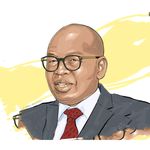
Nairobi International Financial Centre (NIFC) Chief Executive Daniel Mainda.

Photo credit: Joseph Barasa | Nation Media Group

The Nairobi International Financial Centre (NIFC), an initiative aimed at attracting international capital into Kenya, has struggled to live up to its promise amid stiff competition from similar institutions across the continent, particularly in Kigali, Rwanda.

Officially established in 2022, the NIFC attracted only three firms in its first three years, despite offering tax incentives designed to lure global companies to set up holding firms or regional headquarters in the country. For many, it appeared a far-fetched ambition that might never take off.

The NIFC is beginning to gain traction. At least 25 firms have since joined, with about 100 more expected by the end of the year.

But this remains a fraction of what its rival in Kigali has achieved since becoming operational in 2020. With more than 300 companies, the Kigali International Financial Centre has effectively eclipsed Nairobi, despite the latter being conceived much earlier.

Daniel Mainda, Chief Executive at NIFC, discusses with the Business Daily the efforts to attract more firms, the competition from Kigali, and where Nairobi’s edge lies amid growing rivalry from across the continent.

Last year’s incentives seem to have drawn sign-ups at the NIFC. Are there more incentives planned this year?

Yes. This year, more than ever, we have proposed new incentives for regional headquarters, holding companies, funds and startups at large. Because we have established that to take care of one segment is not enough,we want to take care of the whole ecosystem. So, we’re bringing in private equity, venture capital funds.

And now, importantly, we need to unlock local capital. I don't want to disclose much right now because you see the exact incentives a little bit later. But what I can say is that we’re adding something to take care of private equity funds, venture capital, as well as startups. The other segment that we want to take care of is innovative finance, like the virtual asset space and the carbon market space.

The new incentives have so far attracted about 25 companies, are there more expected this year?

Yes, in the advent of the new proposals last year, which are now law, we’ve had about 25 new firms joining the NIFC. And by June 30 this year, we’ll have a total of 40 firms. Our target, as small as it is, was supposed to be very impactful. We want to have about 150 firms by the end of this year.

These firms are going to attract between $1.5 billion (Sh195 billion) to $2 billion (Sh259 billion) by the end of 2027. That’s a significant impact in the economy because once the money starts circulating in our economy, it’s taking care of several ecosystems.

Which are these new companies that have joined so far?

A segment is people who are restructuring their firms to holding companies, and that segment is mainly financial services, that is the insurance companies and banks. Then we have fintechs. A lot of fintechs have come from all over the world and are setting up in Nairobi.

We have also started seeing the advent of funds. We’ve seen private equity funds, European funds, now setting up in the NIFC. These are $5 million to $50 million funds, which are not only investing in Kenya, but also on the continent, and they’re coming to be domiciled here.

Other than the incentives, what are you doing differently to attract more firms?

We are having a strategic and collaborative approach with our regulators. That’s the Central Bank of Kenya (CBK), the Capital Markets Authority (CMA), together with the Nairobi Securities Exchange (NSE).

To take care of the whole ecosystem, you’ve got to be agile and robust. One thing that investors have been grappling with is exits.

We are in discussions with the CMA and the NSE to ensure that the investor journey, especially in the fintech sector, the financial services sector, is very predictable and credible. Now is the era of agility and innovation. For us to be ahead, the NIFC needs to be very agile.

How do you see rising competition, especially from Kigali, impacting your success?

Competition is there in this world in almost every sector. For Rwanda to have an international finance centre, it is their right, because financial centres are designed to stimulate an economy, and to ensure that you achieve certain things within a very short time.

That said, in Kenya, we’re already regarded as a hub for many things. If the NIFC succeeds, the region of East Africa will automatically succeed.

We’re not saying we’re good in everything. Rwanda can be good in climate finance as well as fund domiciliation, Kenya is good in climate capital and also the fintech space. If Rwanda succeeds in all the private finance and also in sustainability and fund domiciliation, the money has to circulate within the country and within the region.

It cannot circulate only in Rwanda. It will circulate in Tanzania, and it will circulate in Kenya. So whatever is good for Kenya to succeed, we don’t want to have it alone, we want everybody to succeed within our region.

What is the NIFC doing to gain an edge?

Apart from improving the incentives, we are collaborating with regulators on policy. The right policies are important. We are also trying to be front and centre of any new innovations coming up. For example, digital assets, carbon assets. We also need to talk about how we can intensify local capital.

But finance centres are not only designed to create incentives, they’re designed to lead and champion a lot of policies within the financial services ecosystem.

Lastly, how will all this benefit ordinary Kenyans?

First, all these firms coming in the country and setting up at the NIFC, they create jobs. For me to license maybe even 40 firms within one year, that tells you I have already unlocked thousands of jobs.

Once you’ve unlocked jobs, you’ve also unlocked a whole ecosystem of housing, schools, everything. As you know, we have an unemployment crisis that we need to sort out. And how do we sort it out? By attracting capital into the country.

PAYE Tax Calculator

Note: The results are not exact but very close to the actual.