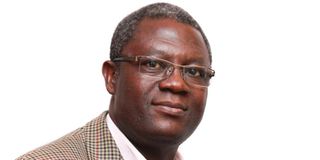
Development economist Charles Abugre leads a team of peers whose goal is to drive unconventional approaches on economic policy and development in Africa.
He spoke to the Business Daily on the sidelines of the first Africa Network Conference for the International Development Economics Associates (IDEAs) in Dakar, Senegal in November and discusses progress in pushing for unorthodox approaches to bettering the socio-economic outcomes for the continent, taking on mainstream ideas and his time in Kenya working for the United Nations.
The mission is to have a coordinated global South perspective on matters of international development and economic policy and its impact on prospects for countries.
Much of the foundations of economics are rooted outside of the newly independent countries and assumptions are based on very matured economies and different traditions.
Countries at the early stage of development are largely agrarian in nature and a rural economy organised around small-scale farmers which is problematic because their participation in the international economy is largely based on the extraction of primary commodities, whether they are agricultural or minerals. These economies are entirely differently set up.
The problem we have had is that there has been an aggressive push of policies from the global North based on their own assumptions and interests such as structural adjustment programmes, privatisation and austerity measures.
What do you consider the early wins for you?
There has been a re-emergence of development economics, though it's in Africa where this growth is the slowest. The first sign of success is this re-emergence and a demand for ideas for re-thinking economics.
Our writings are also becoming more visible and so our scholars are in demand to be in commission and specialised advisory panels on major issues of international economic development. Our numbers are also growing which is an important sign.
How can heterodox economic ideas go mainstream?
First, we must learn to communicate technical and complex ideas in a simple way. We are also collaborating with the mass media and if they can’t understand and project our work then we would know we are in an echo-chamber. We also want to build progressive partnerships with universities.
We also must be in spaces where discussions on economic/public policy are held. We still engage with institutions such as the World Bank and the International Monetary Fund (IMF), but we are more at home with institutions on the continent like Afrexim Bank or the African Development Bank.
We are seeing opposition to anything different as hegemonic powers are challenged, how do you deal with this?
That’s the nature of intellectual discourse. We face that everyday even in countries within the global South. Some of our scholars feel insecure travelling to some countries in the global North because of the views they hold.
We, however must find our own spaces to continue with our work because we know that our views will stand the test of time. With money and power of hegemonies threatened, one can expect a pushback.
You spent some time in Kenya earlier in your career, what did you make of the country?
In my time in Kenya, we had older politicians who were committing to democratic governance and creating spaces for alternative policies. I was working for the UNDP’s Millennium Campaign which pushed for the millennium development goals, and we had to think of different approaches to tackling poverty.
I used to host discussions and that attracted different people like former Chief Justice Dr Willy Mutunga and Kipchumba Murkomen who is now a Cabinet Secretary. At that time, they were all young people, and they believed in goals like equality.
I also travelled around Kenya, I don’t think there is a part of the country I haven’t been to, but I was a UN bureaucrat and probably went to places I wasn’t supposed to go but it helped me understand the country. It was a very hopeful time.
African countries largely confront the same challenges, how different can they go about solving these problems?
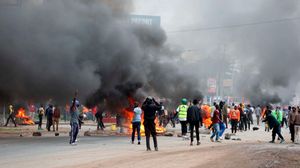
When the trust factor and collective governance collapses, it becomes difficult to contain the anger, which is an important lesson learned from the GenZ protests. The lesson however strengthens our belief that austerity is not a way to economic stability. We have to resist excessive taxation.
The problem is not on how much revenue we can raise but how revenue is applied. We must work towards leadership whose solutions do not add to the burden carried by most of the population. We have the solutions in our hands, but governments must be disciplined and have the best interests of people at heart.
What are IDEAs goals over the medium term in championing alternative economic approaches?
In five years, we should launch a master’s course in development economics in at least two universities. We are training people who will find themselves in institutions such as the Central Bank, commercial banks and in public policy spaces. These scholars should be able to push for alternative ideas in government, which down the line would be experimented on.
What’s the one alternative idea would you like to see go mainstream?
There is a growing belief that the best source of development financing is abroad. Our countries have large domestic resources, both financial and non-finance. We have Central Banks and can regulate our commercial banks properly to serve the real economy, not what I call the ‘casino economy’.
Banks cannot be making money when farmers and small manufacturers have no money. We must also introduce more development banks which will work with commercial banks and big businesses to ensure projects requiring long-term funds can be financed.