Time flies with great content! Renew in to keep enjoying all our premium content.
Huawei powers digital inclusion at Mukuru affordable housing project with smart ICT equipment
Sponsored by HUAWEI
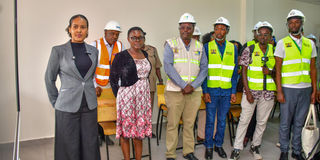
Rose Ogachi, headteacher at New Mukuru Primary School, with Mukuru affordable housing representatives and visitors.
Photo credit: Huawei
By Pauline Ongaji
As Kenya’s affordable housing agenda gathers momentum, technology companies are stepping forward to help shape how residents live. In today’s modern world, digital connectivity is important.
Against this backdrop, Huawei has reinforced its commitment to advancing digital inclusion in Kenya through a strategic intervention at the Mukuru Affordable Housing Project.
By donating advanced broadband and smart ICT equipment to an ICT hub classroom at New Mukuru Primary School, the company is contributing to a growing vision of inclusive urban development.
This intervention brings to life the idea of Mukuru as a digitally enabled community, a place where access to the internet is not a privilege for a few, but a shared resource for all.
At the centre of this initiative is Huawei’s DQ-ODN solution, a low-cost, easy-to-deploy internet infrastructure designed specifically to expand high-speed connectivity in underserved areas. Enabled by Safaricom, the solution introduces entry-level unlimited home fibre packages starting from Sh800 per month, dramatically lowering the cost barrier and making connectivity between 50 to 70 percent more affordable than conventional offerings.
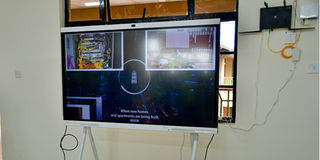
The school is equipped with a robust fibre-to-the-office network, five high-capacity Wi-Fi 7 access points capable of supporting dense device usage, CCTV security cameras, and Huawei’s IdeaHub smart screen. Together, these technologies create a digitally immersive environment that not only enhances learning but also strengthens safety and enables community interaction.
IdeaHub interactive screen display from Huawei.
Photo credit: Huawei
This vision is anchored in a broader philosophy articulated by Huawei ICT Manager Freshina Morogo, who emphasises that connectivity is fundamentally about unlocking human potential.
“By equipping the Mukuru community with digital tools and infrastructure, the initiative goes beyond simply connecting homes. It opens pathways to education, supports emerging livelihoods, and improves overall quality of life. In essence, it reframes connectivity as an enabler of dignity and opportunity, rather than a luxury.”
Freshina Morogo, Huawei ICT solutions manager, speaks to Mukuru affordable housing representatives and visitors during a device donation event.
Photo credit: Huawei
At the same time, Kenya’s policy environment is increasingly aligning with this perspective. Recent building code reforms that require new developments to be fibre-ready are a testament to the significant shift in how infrastructure is now conceptualised.
This approach mirrors global best practices and reinforces the understanding that reliable internet access is now essential for participation in education systems, employment markets, digital finance ecosystems, and government services.
In parallel, Huawei’s efforts in Mukuru are part of a much larger global ambition. Through its Tech4All initiative, the company has committed to connecting 170 million people worldwide by 2030, a goal reaffirmed at the Mobile World Congress 2026 in March.
The immediate impact of the ICT hub is expected to ripple across the community in significant ways. More than 500 learners, alongside residents in the surrounding neighbourhood, will gain access to reliable Wi-Fi connectivity.
Freshina Morogo, Huawei’s ICT solutions manager (left), with Rose Ogachi, head teacher at New Mukuru Primary School, and representatives from the Mukuru Affordable Housing Project.
Photo credit: Huawei
According to Morogo, this access opens doors to online learning platforms, remote work opportunities, and essential digital services, effectively bridging gaps that have long limited socio-economic mobility.
“For young people especially, it represents a chance to acquire skills that are increasingly critical in a technology-driven world.”
Equally important is the role of technology in enhancing safety and confidence within the community. The integration of CCTV surveillance contributes to a more secure environment for families and small businesses, helping to foster a sense of stability that is essential for growth.
Meanwhile, the IdeaHub smart screen introduces interactive, digital-first learning experiences that move beyond traditional teaching methods, making education more engaging, collaborative, and effective.
Taken together, these elements transform the ICT hub into a gateway, through which knowledge is accessed, skills are developed, and ideas are born. It is within such environments that innovation begins to take root, and where communities can start to reimagine their own potential.
Looking ahead, Mukuru is poised to be a model for the future of housing projects across the country.
A visitor at the Mukuru affordable housing project.
Photo credit: Huawei
“As urban populations continue to expand, the integration of housing, connectivity, and community empowerment will be critical in shaping sustainable and inclusive growth,” says Morogo.
According to her, by embedding digital solutions into affordable housing projects, stakeholders can ensure that residents are empowered to participate fully in the digital economy.
This approach also aligns closely with the United Nations Sustainable Development Goals, particularly those focused on quality education, reduced inequalities, and sustainable cities and communities.
“By addressing digital exclusion in underserved urban areas, initiatives like this one contribute to a broader global effort to create more equitable societies,” Morogo emphasises.