During a recent church service at the Jesus Compassion Ministry (JCM), President William Ruto declared that the government would begin the construction of a Thika-Nairobi expressway from September.
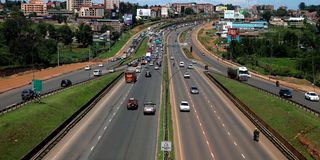
The 60-kilometre highway, he said, would begin from the Museum Hill interchange and run all the way to Thika town to address the traffic congestion along the highway.
While it is commendable that this matter is finally being addressed (after years of suffering), the solution proposed is one that causes dismay. It appears to me that the government has adopted a one-size-fits-all solution to any traffic problems that it faces, which is adding more lanes.
See, it all started with the construction of the 27km expressway from Westlands to Mlolongo.
While many people agreed that it would’ve been better, instead, to develop a mass transit option along that route to decongest the road (though we later learnt that the main purpose of the expressway was to get diplomats from Westlands to the Jomo Kenyatta International Airport before one could say ‘voila’), the government still went on with the expressway option, I believe, in the assumption that more lanes equal less traffic congestion.
Be that as it may, as economic principles, which also apply to transport planning, have shown us, increasing the supply of a good (in this case, number of lanes) has the unintended effect of increasing the demand, a phenomenon known as ‘induced demand’.
Granted, when highways are expanded, the immediate effect would be a reduction in traffic congestion. However, this reduction in gridlock encourages more drivers to use the road (who previously didn’t consider so because of travel time and inconvenience), leading to a return to previous congestion levels, or even worse conditions over time.
What the government should do (and this applies to all problems that it encounters) is assess each and every one of the problems individually, including the different roads that experience traffic jams, and come up with a solution that suits each one.
Not slapping the band-aid on all wounds.
For example, with Thika Road, a proper assessment would definitely inform one that the problem is the numerous traffic choke points that exist, such as the Pangani interchange, the TRM roundabout and the Globe Roundabout.
Therefore, the suggested solution should focus on addressing these problems, rather than just building a road in the sky and walking away, expecting magic to follow.
For the Pangani roundabout, we do notice that the four main lanes on the superhighway, the two service lanes, the two lanes from Kiambu Road and the one lane from Limuru Road, nine lanes in total, all converge into four lanes at the Pangani tunnel, impeding the smooth flow of traffic.
The entry of the road into the central business district (CBD) at the Globe Roundabout also faces the same problem.
The four lanes from Murang’a Road (after the Pangani tunnel ceases being Thika Road and becomes Murang’a Road) converge with the three lanes from Kipande Road, the one lane from Kijabe Street, and sometimes, one of the lanes from University Way. All these roads converge to become two lanes into the CBD through the Khoja stage.
One of the solutions that had been proposed by the Nairobi Metropolitan Service, regarding the Globe Cinema Roundabout, was the acquisition of the five parcels of land around it (including where the Kahama Hotel sits), measuring 2.59 hectares, for the constructing a multi-modal bus terminal. Why the deal was terminated, we do not know. But all we agree on is that it would’ve been beneficial.
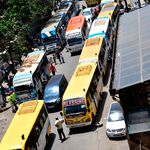
This would’ve reduced the congestion of buses getting into the CBD, and at the same time, provide room for the housing the BRT station that should’ve been constructed along Thika Road. And this brings us to the second solution, of introducing a mass transit option such as BRT.
The population along Thika Road and commute to town is very high. And I believe that the previous government was well aware of this, hence they proposed the construction of BRT Line 2 (also known as Simba), which would’ve run from Kenol to the Nairobi CBD (and eventually, to Rongai).
This is a project that should be revived, for it would decongest the existing road.
Both these solutions, I believe, would be better than adding four more lanes atop the existing 12 lanes of the Thika Superhighway.
The writer is Founder and Executive Director, Qwani
Unlock a world of exclusive content today!Unlock a world of exclusive content today!