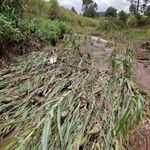
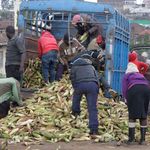
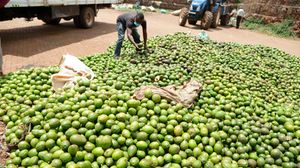
There is an urgent need to design and scale smarter parametric insurance products to close the protection gap and build stronger resilience amid rising severity and frequency of climate risks.
Smarter products must move beyond single risk triggers to reflect real farming conditions, improve data and pricing accuracy, enhance affordability through targeted support and value chain integration, and align policy, technology and finance to deliver timely and reliable resilience at scale.
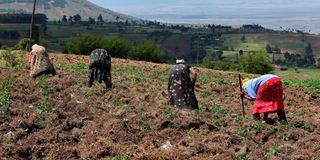
World Bank data show that agriculture employs about 50 percent of Sub-Saharan Africa's labor force and contributes around 18 percent to regional GDP.
However, extreme weather events driven by climate change are projected to reduce crop revenues by up to 30 percent beyond 2050, driving 20-30 percent into poverty in high-emission scenarios (+2°C). These repeated shocks severely threaten smallholder farmers' livelihoods and regional food security.
The African Development Bank (AfDB) estimates that about 97 percent of smallholder farmers in Africa lack insurance due to limited access, while premiums remain unaffordable without subsidies. Furthermore, according to One Acre Fund, subsidized agri-insurance is available in only 4 of 54 African countries.
Traditional agricultural insurance relies on lengthy assessments to quantify loss before compensation and lacks the ability to capture climate-driven losses, which are absorbed by farmers. This protection gap reveals flaws in product design, data quality, regulation and trust.
Parametric insurance holds promise in closing this gap by offering smallholder farmers quick payouts based on precise and pre-defined thresholds, such as extreme temperatures or rainfall levels.
It delivers liquidity when farmers critically need it most by bypassing the lengthy loss assessments commonly associated with traditional indemnity insurance.
However, many existing parametric schemes focus on a single risk, typically drought. In reality, farmers confront multiple overlapping threats, including heat stress, floods, pests and crop diseases.
These challenges are compounded by scarce climate data, low farmer awareness and weak distribution networks. This disconnect creates basis risk, where payout triggers do not match actual losses or account for crop sensitivity or microclimate, eroding farmers’ confidence. Parametric products must better reflect farming realities and be clearly explained so farmers grasp what is covered.
Additionally, policy and market structures lag. The Nairobi Declaration on Sustainable Insurance 2025 Current State Report highlights persistent barriers: affordability challenges for vulnerable groups, fragmented regulation across the region and limited integration of Environmental, Social and Governance (ESG) factors into underwriting and operations.
ESG-linked underwriting in 2025 accounted for just 6.4% of portfolios, with only 5.6 percent explicitly targeting low-income households.
This leads to an underestimation of climate and social risks, resulting in unstable pricing. Better incorporation of climate metrics, land-use information and vulnerability indicators would allow pricing that accounts for escalating future impacts beyond historical patterns.
Affordability is central to sustained resilience. Low-income farmers often cannot pay premiums upfront. Targeted, time-bound subsidies prove vital during initial rollout. Bundling insurance with inputs, such as hybrid seeds, fertilizer, or credit, lets farmers cover costs when cash flows in, usually at harvest.
Such strategies sync insurance with farmers’ financial cycles, easing pressure in planting seasons. They also strengthen distribution via cooperatives, agribusinesses and lenders, improving policy retention and cutting dependence on permanent subsidies.
Multi-risk and hybrid models are emerging. These combine parametric triggers for fast payouts with selective loss verification from traditional indemnity insurance. The combination reduces basis risk while managing costs.
Technological progress is also making a big difference. Satellite imagery, advanced weather analytics and straightforward tools like picture-based crop monitoring enhance accuracy and build trust between insurers and farmers. Furthermore, insurtech innovations cut costs through mobile sign-ups, automated payouts, value-chain partnerships and digital tools.
ACRE Africa, a leading agricultural insurtech, leverages satellite data and mobile USSD platforms to provide index-based insurance. It partners with global reinsurers to secure risk capacity and local underwriters for mainstreaming, proving that scalable coverage can reach remote farmers even amid low literacy and connectivity issues in rural areas.
Financing remains a key enabler. Donor funding can drive early uptake, but long-term sustainability depends on mobilizing private capital through public-private partnerships. Initiatives like the AfDB Africa Climate Risk Insurance Facility for Adaptation (ACRIFA) and FSD Africa’s Inclusive Insurtech Investment can de-risk markets, crowd in private investment and enable scale.
Furthermore, regional risk pooling magnifies these gains. By spreading climate risks across borders, pooled mechanisms reduce volatility, decrease reinsurance costs and unlock global capital.
The African Risk Capacity (ARC) illustrates this potential at the sovereign level. Its Replica Programme extends benefits to humanitarian partners. In Mozambique, ARC disbursed over $5.4 million (about Sh696 million) in 2025 for drought and Cyclone Chido, demonstrating how parametric, rules-based financing enables swift aid.
When executed effectively, parametric insurance can secure farmers’ sustained resilience, safeguard food security and promote long-term economic stability throughout the continent.
The authors are Sustainability Experts at Impact Africa Consulting Limited
Unlock a world of exclusive content today!Unlock a world of exclusive content today!