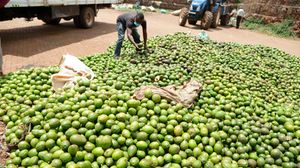
Silent mental health crisis among Kenyan farmers amid climate change

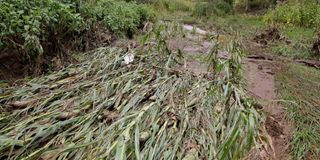
A section of a maize farm that was flooded following heavy rains that pounded in Elburgon, Nakuru County on September 09, 2023. 

Photo credit: File | Nation Media Group

Across Kenya’s rural landscape, the effects of climate change are visible in drying rivers, shrinking harvests, and declining household incomes.

What remains less visible is the psychological toll on farmers whose well-being is deeply connected to the fate of their land. As droughts intensify and rainfall patterns become unpredictable, many farming communities are experiencing silent emotional exhaustion alongside falling yields.

According to an Associated Press research published in October, research in Kilifi involving more than 15,000 women revealed a strong link between extreme heat, prolonged drought, and rising cases of mental distress, including depression and suicidal thoughts.

Similarly, a 2022 study by Njeru, Arasa, Musau, and Kihara in Embu and Meru counties found that 35.2 percent of smallholder farmers exhibited symptoms of anxiety, depression, or psychosomatic disorders, with weather variability identified as a major trigger.

These findings show that climate instability has evolved into an economic and psychological crisis affecting Kenya’s agricultural communities.

Agriculture shapes livelihoods, social identity, and community stability across rural Kenya. When crops fail, incomes decline, and a sense of personal control over the future fades.

However, policy responses continue to focus narrowly on physical adaptation measures such as inputs, irrigation, and market linkages, leaving out the human dimension of resilience. Extension services rarely address stress management or emotional recovery, and national adaptation strategies still treat mental health as an afterthought.

This gap is evident in the structure of agricultural aid. Subsidy and input programmes reach farmers but rarely provide counselling or mental health screening.

Community health promoters who interact daily with households could play an important preventive role, yet lack the training to identify psychological distress, according to the Associated Press. Integrating psychosocial support into agricultural policy would strengthen both confidence and productivity.

Kenya must begin to view climate adaptation through a human lens. Training agricultural officers to recognise distress, linking crop insurance to wellbeing assessments, and supporting peer-based counselling networks would build resilience from the ground up.

The true measure of climate adaptation lies in restoring both productivity and the mental resilience of farmers who must continue to work under growing uncertainty.

The writer is a researcher, Mashariki Research and Policy Centre.

PAYE Tax Calculator

Note: The results are not exact but very close to the actual.