Rising tensions in the Middle East are once again a stark reminder of how exposed Kenya’s economy is to global geopolitical shocks.
While the direction of events remains uncertain, the potential impact on Kenyan investors would be both immediate and far-reaching, transmitted through familiar but powerful channels, energy prices, inflation, currency stability, and interest rates.
At the heart of this issue lies one defining factor: how long the conflict lasts. If tensions escalate but are contained within a short period, the economic effects on Kenya are likely to follow a predictable pattern.
Oil prices would spike sharply, financial markets would react nervously, and investor sentiment would weaken. Yet such disruptions are often temporary.
As seen in past geopolitical episodes, markets tend to stabilise once uncertainty begins to recede, allowing economies such as Kenya’s to regain their footing relatively quickly.
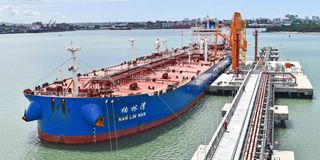
A prolonged conflict, however, would tell a very different story. Sustained disruption to oil supply, particularly through critical Middle Eastern routes, would keep global energy prices elevated for an extended period. For a country like Kenya, which is heavily reliant on imported fuel, this would feed directly into the domestic economy.
Higher fuel costs would cascade through transport, manufacturing, and agriculture, steadily pushing up the cost of goods and services. Over time, this would translate into broader inflationary pressure, eroding household purchasing power and tightening overall economic conditions.
The political economy dimension cannot be ignored. With the 2027 election cycle gradually coming into view, there will be significant pressure on policymakers to shield consumers from sharp increases in the cost of living.
While government intervention, through subsidies or price stabilisation measures, may provide short-term relief, it also introduces fiscal strain, potentially shifting the burden elsewhere in the economy.
At the same time, rising oil prices would increase demand for dollars to finance imports, placing the Kenya shilling under pressure. This dynamic is often exacerbated during periods of global uncertainty, when investors move capital to safer markets.
Kenya’s current foreign exchange reserves, estimated at around 6.1 months of import cover, offer an important cushion and signal a degree of resilience.
However, if the external shock persists, the pressure on the current account could gradually erode this buffer, leading to a more sustained weakening of the currency.
For monetary authorities, this creates a delicate balancing act. The Central Bank of Kenya (CBK) has recently taken steps to lower interest rates in an effort to support economic recovery and stimulate private sector lending. A prolonged external shock would complicate this approach.
In the near term, a cautious pause is likely, as policymakers assess the evolving situation. But if inflationary pressures intensify, driven by persistently high energy costs, the Bank may be forced to shift direction and tighten policy. Such a move would inevitably raise borrowing costs, reshape investment decisions, and alter returns across asset classes.
Investor sentiment, particularly in the equities market, would also be affected. Periods of heightened geopolitical uncertainty tend to trigger short-term caution, and the Nairobi Securities Exchange could see episodes of selling pressure as investors respond to global signals.
Yet this does not necessarily point to a structural decline. Kenya’s market fundamentals, supported by corporate earnings and a still relatively accommodative interest rate environment, suggest that any volatility may be temporary. For disciplined, long-term investors, such moments often present selective opportunities rather than reasons for retreat.
The broader economic outlook would inevitably come into focus. With growth currently projected at around five percent, sustained increases in input costs and potential supply disruptions could weigh on business activity and consumer demand.
Over time, this may prompt downward revisions to growth expectations, particularly if external pressures remain unresolved. For Kenyan investors, the path forward is not to retreat, but to remain steady, grounded in fundamentals, alert to change, and disciplined enough to see beyond the noise of the moment.
In this environment, the most valuable asset for investors is not speed, but perspective. Watching how oil prices evolve, how the shilling responds, how inflation trends shift, and how the Central Bank signals its next move will provide far more clarity than reacting to headlines.
Kenya enters this period from a position of relative macroeconomic stability, supported by stronger reserves and improving monetary conditions. That foundation offers reassurance. But resilience will ultimately be tested by duration.
If the conflict proves brief, the economic impact will likely fade as quickly as it appears. If it endures, the effects will become more deeply embedded, shaping inflation, currency dynamics, and investment returns over time.
The writer is the CEO of Apollo Asset Management.
Follow ourWhatsApp channel for the latest business and markets updates.
Unlock a world of exclusive content today!Unlock a world of exclusive content today!