Global tensions: Are investors complacent?

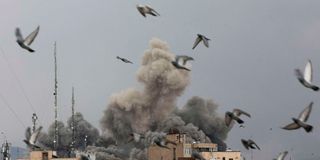
Birds fly as smoke rises following an explosion, after Israel and the US launched strikes on Iran, amid the US-Israel conflict with Iran in Tehran, Iran on March 2, 2026. 

Photo credit: Reuters

Amid the geopolitical firestorm in the Middle East, are investors being complacent or just savvy?

A little more than two months into 2026 and we already have an exhaustive list of market-moving events, including the ongoing geopolitical standoff in the Middle East, the US capture of ex-Venezuelan President Nicolás Maduro, threats to Greenland’s sovereignty, the latest US Supreme Court tariff ruling followed by US President Donald Trump’s declaration of a revamped tariff structure, to name a few.
Global equities hit all-time highs as recently as late February. However, if you had told me at the beginning of the year that we are in for such an intense and steady stream of news flow, I would have probably said that markets would be significantly lower.

While market sentiment has taken a hit over the last few days due to flaring tensions in Iran, the question remains – are investors being complacent, or are they simply dismissing the recent developments as noise?

My view is that it is a bit of both. Before the recent regional instability in the Middle East, the macroeconomic environment appeared increasingly ‘Goldilocks-like,’ which was just right for steady growth.

Global growth was accelerating modestly and inflation was cooling worldwide, with further interest cuts predicted in the US and the United Kingdom.

Furthermore, corporate earnings expectations were generally being revised upward and market recovery broadened across sectors and geographies. In short, the market picture looked quite rosy.

Then, the US-Israel airstrikes on Iran occurred, triggering retaliatory strikes by Iran across the Middle East.

About 20 percent of the world’s oil and liquefied natural gas (LNG) shipment passes through the Strait of Hormuz sandwiched between Iran and Oman.

The strait is critical to keeping oil and gas supplies flowing from the Gulf producers and capping prices. Despite reassurances by the US, traffic in the strait has almost come to a standstill due to fears of attacks on ships.

There are more signs of supply disruptions after Qatar halted production at the world’s largest LNG plant and a major Saudi Arabian oil refinery was hit by a drone, but we believe these to be transitory issues.

Translating geopolitical tensions into economic reality?

The primary ‘transmission mechanism’ is via energy prices. Higher oil and gas prices act as a hidden tax on consumers and businesses, thereby slowing overall economic activity and fuelling inflation.

As we saw in 2022, central banks can only look through the inflationary impact for so long. Therefore, both the magnitude and duration of higher energy prices are key. Our central scenario is that the Middle East conflict will be weeks- rather than months-long.

Consequently, oil and gas prices should decline to pre-conflict levels, converting any dips in equity markets into buying opportunities as strong fundamentals regain focus. Of course, we cannot rule out a more prolonged conflict, but the upcoming November US mid-terms certainly incentivise Trump to resolve the situation via military might or negotiations.

What should you, as an investor, do?

As with most things in life, balance is key. Three core principles answer the above question: The narrower the investment, the greater the probability of loss, the narrower the investment, the greater the potential size of loss and we tend to overestimate our ability to predict the future. Conversely, broader exposure improves the probability of gains.

Since 1992, even a simple 60 percent global equity and 40 percent global bond portfolio has had a 93 percent probability of generating a positive return in any given month.

Therefore, allocating 70-90 percent of your investment portfolio across geographies and asset classes – with equities, bonds, gold, private assets and hedge fund strategies – is a vital foundation.

The decision-making process for your foundation portfolio is simple: invest consistently and accelerate investments during market weakness. One rule of thumb is to accelerate purchases when you are most concerned – markets usually trough during the worst of times. It is hard to do but is highly rewarding, especially over the long term.

The remainder of the portfolio can target areas expected to perform better in the current environment. We remain positive on the US technology sector. We view the sector not as a bubble but as one backed by strong earnings growth and upwardly revised capital expenditure (CapEx) investment plans, which we expect to rise by over 50 percxent in 2026, led by AI investments.

However, not all areas will outperform, as the tech cycle is still in its early phases. Moreover, the recent broad-based sell-off of the tech sector due to AI-related concerns has created opportunities. For instance, we view cybersecurity as an essential backbone of digital infrastructure, with the ‘sell now, worry later’ market sentiment having created value here.

Although it’s hard to predict when the geopolitical uncertainty will subside, looking past the headlines to focus on the enduring fundamentals will drive long-term portfolio success.

Steve Brice is Global Chief Investment Officer at Standard Chartered’s Wealth Solutions unit

PAYE Tax Calculator

Note: The results are not exact but very close to the actual.