Aliko Dangote, Africa’s most successful industrialist, has spent the better part of the last year delivering a single, unfashionable message across the continent.
Speaking at various investment summits, he has put it plainly: “The only way for you to attract foreign investments or investors is by having successful local investments. Domestic investors are the ones who actually attract foreign investors. If you don’t make it attractive for local investors to come and invest, no foreigner will come and invest.”
On Kenya’s southern coast, one of those investments is waiting to be treated as such. Every textbook on industrial investment lists the ingredients that a serious project must combine: credible promoters, deep financiers, world-class strategic partners, qualified people, modern technology, the right inputs, and secured land. Kwale International Sugar Company Limited (KISCOL) was structured to deliver every one of them.
The promoters are the Pabari Group of Kenya and Omnicane Limited of Mauritius — two houses with decades of combined experience in trading, agro-industry, energy, infrastructure and large-scale investment, and the financial capacity to carry a project of this scale across cycles.
The financiers are not fringe lenders. The project drew long-term commitments from a regional syndicate that includes KCB Bank, Stanbic Bank, Co-operative Bank and the Trade and Development Bank (TDB) on the Kenyan and regional side, alongside Mauritius Commercial Bank (MCB) and SBM Bank of Mauritius offshore.
That is the kind of syndicate that does not assemble around speculative bets; it assembles around projects that have been independently appraised, structured, and underwritten on the assumption that the legal and operational ground beneath them will hold.
The strategic partnership with Omnicane brings world-class operating discipline in sugar production, irrigation engineering and agro-industrial management from one of the most respected names in the global sugar industry.
The technical team is drawn from Kenya, India and Ethiopia, marrying local knowledge to international operating experience across agriculture, factory management, irrigation and engineering.
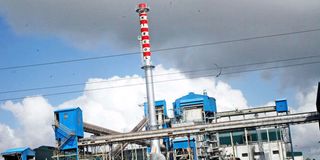
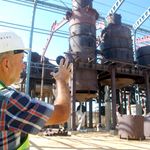
The technology and infrastructure match the ambition: a modern 3,300 tonnes-of-cane-per-day factory, expandable to 5,000 tonnes-per day, coupled to an 18-megawatt bagasse-fired cogeneration plant that turns mill waste into clean grid power, served by dams, boreholes and water pans feeding the most water-efficient sub-surface drip irrigation system in commercial sugar anywhere in the world.
The agronomy is equally deliberate. KISCOL introduced fast-maturing cane varieties selected for Kwale’s coastal climate. Cane that takes up to 18 months to mature in the western sugar belt reaches the mill in roughly 12 months here — a third less working capital tied up in every standing crop, a third more turns of the same hectare over a decade.
At full design capacity, the project would close almost 100,000 metric tonnes of Kenya’s annual sugar deficit—about 10 per cent of the gap Kenya fills with imports. The foreign exchange spent importing sugar could be retained and recirculated at home. Every ingredient except one, in other words, is in place.
The land question in Kwale predates KISCOL. The 42,000-acre estate previously hosted the Madhvani sugar operation before being restructured under a government-backed agreement designed to balance investor and community interests. Under the plan, 15,000 acres were allocated to KISCOL for the nucleus estate and factory infrastructure, while 27,000 acres were reserved for local households through a resettlement programme.
Each household was to receive a 5.5-acre outgrower package comprising three acres for cane, two acres for food farming, and half an acre for a homestead.
The arrangement promised secured land for the investor, title and livelihoods for the community, and an integrated outgrower economy.
However, the resettlement plan was never implemented. The 27,000 acres were not transferred, and the promised outgrower packages were never issued. Communities, therefore, remained on land allocated to KISCOL, triggering years of disputes and litigation over access to the nucleus estate.
The unresolved land issue delayed key infrastructure and undermined the project’s operations.
In litigation arising from the failed resettlement plan, KISCOL was awarded about Sh24 billion against the government for breach of contract, reflecting losses tied to unrealised production, jobs, taxes, power generation and import substitution.
Ian Njoroge is a Mechanical engineer registered with the Engineers Board of Kenya. Email: [email protected]