Kenya is not short of ambition. From infrastructure expansion to digital transformation, from universal healthcare to affordable housing, the country’s policy landscape is rich with promise.
Yet, time and again, the gap between policy and impact remains stubbornly wide. Projects stall, costs escalate, and intended benefits fail to reach citizens. The issue is not vision, it is execution.
Recent trends in public spending underscore the stakes. Development expenditure has consistently accounted for roughly a third of the national budget. This is a significant commitment of public resources.
However, across developing economies, nearly 40 percent of public sector projects either face delays, exceed budgets, or fall short of their objectives.
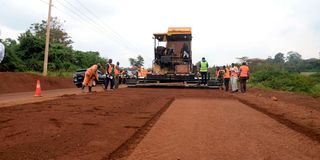
Kenya is not immune to these challenges. The consequences are tangible: incomplete roads, underutilised facilities, and diminished public trust. At the heart of this problem lies project management, a structural weakness that is often overlooked.
For decades, Kenya’s development discourse has prioritised policy design. While this is necessary, it is no longer sufficient.
The modern public sector requires a shift in mindset, from policy-first to delivery-focused governance. This means embedding structured project management practices at every stage, from planning and budgeting to implementation and evaluation.
Evidence strongly supports this approach. Organisations that adopt standardised project management frameworks waste significantly less money than those that do not. The difference is not marginal, but transformative. Efficient project governance improves accountability, enhances transparency, and ensures that resources are directed toward measurable outcomes.
This is particularly critical as Kenya continues to pursue long-term strategies such as Kenya Vision 2030 and its successor plans. These frameworks are designed to elevate the country to middle-income status, but their success hinges not on policy articulation, but on disciplined execution.
The challenge, therefore, is twofold. First, there is a capacity gap. Many public sector institutions still lack adequately trained project management professionals.
While technical expertise in specific sectors such as engineering, health, and education is strong, the ability to manage complex, multi-stakeholder projects remains uneven. This often leads to fragmented implementation, weak coordination, and reactive decision-making. Second, there is an institutional gap.
Project management is not yet fully integrated into the governance architecture of many public agencies. In some cases, it is treated as an administrative function rather than a strategic capability. This limits its effectiveness and reduces its influence on decision-making at the highest levels.
Addressing these gaps requires deliberate action. Capacity building must become a priority. This includes not only training public officials in globally recognised project management methodologies, but also fostering a culture of continuous learning and professionalisation.
The growing global demand for project management roles, projected to rise sharply in the coming years, signals an opportunity for Kenya to build a workforce that is not only competent, but competitive.
Equally important is institutional reform. Public agencies need to adopt standardised frameworks for project governance, risk management, and performance measurement. This should be complemented by clear accountability structures and robust monitoring systems.
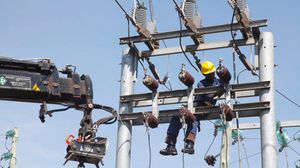
Digital tools can play a key role here, enabling real-time tracking of project progress and facilitating data-driven decision-making. Collaboration is another critical piece of the puzzle. Effective project delivery in the public sector often involves multiple actors, such as government ministries, county governments, development partners, and private sector players.
Without coordinated effort, even well-designed projects can falter. Structured platforms for knowledge sharing and cross-sector engagement are essential to align priorities and streamline implementation.
Ultimately, improving project delivery is not just a technical issue. It is a governance imperative. Citizens experience outcomes, not policy. A road either exists or it does not. A hospital either functions or it does not. The credibility of public institutions depends on their ability to deliver tangible results.
Kenya stands at a pivotal moment. With increasing investment in development and growing complexity in public projects, the cost of poor execution is rising. But so too is the opportunity. By strengthening project management practices, the country can unlock greater value from its investments, accelerate progress toward national goals, and restore confidence in public service delivery.
The conversation must now move beyond what we plan to do, to how we deliver it. Because in the end, development is not measured by intentions, but by impact.
Maureen Ochang’ is the President, Project Management Institute (PMI), Kenya Chapter