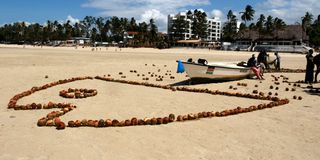
This week, as the global ocean community gathers in Mombasa for the Our Ocean Conference, Africa has an important opportunity to help shape the next chapter of ocean action, not as a passive participant, but as a leader.
This is the first time the conference will be hosted in Africa. That matters. It places a global spotlight on the continent’s coastal communities, marine biodiversity, blue economy potential, and the choices we must make now to secure a healthy, productive and resilient ocean for generations to come.
Across Africa, governments are investing in ports, fisheries, maritime trade, coastal tourism, renewable energy and ocean innovation. These investments are essential. But they will only deliver lasting prosperity if they are anchored in healthy ecosystems and strong governance.
The ocean is not simply a backdrop to Africa’s development story. It is infrastructure. It feeds families, powers trade, protects coastlines, stores carbon, sustains culture and creates jobs.
If we degrade it, development becomes more fragile and more expensive. If we invest in it wisely, it becomes one of Africa’s strongest foundations for inclusive growth.
The numbers make this clear. Ocean-based sectors provide more than 130 million full-time equivalent jobs globally, while aquatic foods nourish more than three billion people. The ocean also absorbs about 30 percent of human carbon dioxide emissions, and more than 90 percent of excess heat trapped by greenhouse gases.
Yet an estimated 15 million tonnes of plastic waste enter the ocean each year, and 680 million people living in low-lying coastal areas are directly exposed to rising coastal risks. For Africa, these are not distant statistics; they are signals that sustainable ocean management is central to food security, climate resilience, jobs and long-term economic stability.
The central question before us in Mombasa is, therefore, not whether Africa should pursue a blue economy. It is whether we will build one that is truly blue: grounded in science, powered by communities, attractive to investors, and capable of delivering at scale.
The success of Africa’s blue economy depends not only on what is built along our coastlines, but also on how well we protect and manage marine life. Our seafood systems must be central to addressing the dual crises of climate change and biodiversity loss.
These ecosystems are not only vital for food systems, but also form part of the emerging blue carbon assets, natural climate solutions that contribute directly to Africa’s national climate commitments under the Paris Agreement.
This is where Africa can lead. Our continent is home to some of the world’s most important marine systems, from the Western Indian Ocean to the Benguela Current.
These waters support food security, livelihoods, biodiversity and climate resilience across national borders. They also remind us that ocean systems do not follow political boundaries. Our response must, therefore, be regional, practical and collaborative.
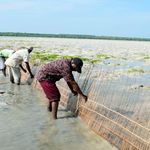
For millions of Africans, this connection is deeply personal. Fishers, tourism operators, traders, and coastal communities depend directly on healthy seas for income, food and stability. When ecosystems decline, livelihoods weaken and food insecurity rises. When they recover, opportunities grow.
While often framed as an environmental issue, the ocean is fundamentally an economic and life-support system. It supports billions of livelihoods, underpins global trade, and helps regulate climate by absorbing excess heat and carbon, reducing the severity of climate impacts.
Without a healthy ocean, economic development, food security and climate resilience will be harder and costlier, if not impossible, to achieve. For Africa, this is fundamentally a development priority.
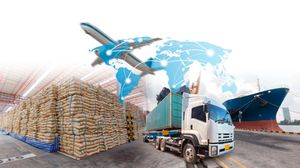
Thirty-eight African countries have coastlines, and millions rely on marine and coastal resources. Fisheries feed communities and support local economies. Ports connect countries to regional and global markets. Coastal tourism creates jobs and generates foreign exchange.
Mangroves, coral reefs and seagrasses, when protected, restored and well managed, serve as critical assets, supporting fisheries while protecting homes, infrastructure and livelihoods from storms and erosion.
The Our Ocean Conference in Mombasa must, therefore, be more than a convening. It must be a delivery moment. It should elevate African leadership, mobilise serious commitments, unlock investment and accelerate practical action across marine protection, sustainable fisheries, marine pollution, climate resilience, maritime security and the sustainable blue economy.
The writer is the Regional Managing Director of The Nature Conservancy's Africa programme.
Unlock a world of exclusive content today!Unlock a world of exclusive content today!