Africa future trade corridors may run East, not West

Port of Mombasa. 

Photo credit: Reuters

For decades, Africa’s trade and logistics networks were oriented toward Europe and North America. Ports, railways, and road networks were designed to facilitate the export of raw materials to Western markets, often leaving intra-African trade underdeveloped.

Today, a quiet but significant shift is underway. With strategic investments, infrastructure, and partnerships, China is reshaping trade corridors across the continent, signalling that Africa’s economic future may increasingly run eastward, toward Asia, rather than west.
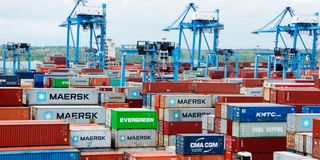

The foundation of this shift lies in connectivity. Chinese-backed ports, rail lines, and highways are linking production hubs to regional and global markets more efficiently than ever before.

From the Mombasa–Nairobi standard gauge railway in Kenya to the Bagamoyo port project in Tanzania, investments are not only creating physical infrastructure but also redefining the economic geography of East Africa.

These corridors reduce the cost of moving goods, shorten transit times, and make African exports more competitive on a global scale.

Trade patterns are changing as a result. Historically, African countries exported primarily raw commodities to Europe and North America, capturing only a fraction of the value chain.

Today, access to Asian markets through Chinese-financed corridors allows African nations to diversify exports, increase industrial capacity, and integrate into global supply chains.

Goods such as processed agricultural products, textiles, and manufactured items are now moving eastward, reflecting a shift from dependency towards industrialised trade engagement.

China’s role is not limited to physical infrastructure. Financing, technology transfer, and technical expertise accompany these projects. Ports and logistics hubs are designed with advanced management systems, customs facilitation, and operational efficiency in mind.

Industrial parks adjacent to these corridors enable local processing and value addition, ensuring that Africa’s exports are not limited to raw materials but include higher-value products. This combination of infrastructure and industrialisation is redefining Africa’s economic potential.

Moreover, eastward trade corridors enhance regional integration. Efficient transportation links not only connect African countries to Asia but also strengthen intra-African trade.

Landlocked nations gain access to ports, regional economies become more interconnected, and supply chains for essential goods become more reliable. These improvements reduce trade bottlenecks and encourage investment, contributing to a more resilient and diversified African economy.

Critics often argue that reliance on Chinese investment risks overdependence. While caution is warranted, it is important to distinguish between dependency and strategic partnership. African governments actively negotiate projects, select priority sectors, and manage operational terms.

The corridors are not unilateral impositions; they are tools African states can leverage to achieve economic objectives, enhance competitiveness, and expand market access.

The eastward orientation also has geopolitical implications. By diversifying trade relationships, African nations gain leverage in global negotiations, reducing reliance on Western markets and creating alternative growth pathways.

The result is a more balanced, multipolar approach to global commerce that enhances Africa’s bargaining position while providing concrete economic benefits.

Equally significant is the impact on local communities. Improved transport links facilitate access to jobs, education, and healthcare, while industrial zones along corridors create employment opportunities and stimulate regional economies.

In this sense, infrastructure projects are not abstract engineering feats; they are transformative social and economic interventions.

Africa’s trade future is being reshaped by eastward corridors that connect the continent to Asia and integrate domestic production into global value chains.

China’s role in financing, building, and enabling these corridors is substantial, providing the technical know-how and investment needed to realise this potential. Far from being a simple directional change, this shift represents a strategic reorientation—toward diversified trade, regional integration, and sustainable industrialisation.

If Africa is to fulfil its economic potential, it must embrace these corridors, manage them wisely, and ensure that trade flows benefit both governments and citizens.

The writer is a journalist and communication consultant.

PAYE Tax Calculator

Note: The results are not exact but very close to the actual.