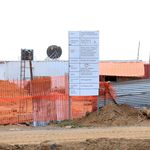
Slightly over half a year ago, President William Ruto was in Kilifi to launch the Vipingo Special Economic Zone (SEZ), a landmark 2,000-acre project envisioned to create 35,000 jobs.
For many observers, the headline numbers captured the moment, but for those of us invested in the real economy of the county, the significance lies more in what such initiatives unlock.

The Vipingo SEZ is leveraging government incentives designed to attract both public and private capital to the tune of Sh390 billion, an ambitious effort to catalyse large-scale economic transformation.
According to government data, 870,425 people in Kilifi, or 59.9 percent of the county’s population, are multidimensionally poor. This means they suffer from overlapping deprivations that extend beyond income to include poor health outcomes, limited access to education and low living standards.
This is despite, Kilifi being resource rich, with reserves of manganese, salt and titanium, alongside unique building materials and a coastline that supports both tourism and blue economy activities. Such quagmires are familiar across Kenya, with resource abundance sometimes not automatically translating into shared prosperity.
This is why the renewed focus on industrialisation, anchored by SEZs and targeted investment promotion, deserves attention. Kenya’s manufacturing sector has hovered at around seven to eight percent of GDP for years, well below the 20 percent aspiration outlined in the government’s long term development blueprint, Vision 2030.
SEZs, like the one under development in Vipingo, offer a realistic pathway to bridge that gap by clustering infrastructure, allowing both domestic and foreign investors to take calculated risks.
But the real test for investors in counties like Kilifi is to ensure that local communities participate meaningfully in the opportunities created. This calls for deliberate alignment between investors, county governments and local institutions, with skills development being central.
Without a workforce that can meet the needs of emerging industries, the promise of job creation risks being diluted. From a private sector perspective, partnerships with technical training institutions can help close this gap.
There is also a broader lesson about the role of policy consistency. Investors, particularly those committing capital at the scale of investments in the Vipingo SEZ, are making long-term bets and require assurance that the policy environment will remain stable across political cycles. In recent years, the government has signalled its commitment to improving the ease of doing business, even as it navigates fiscal pressures and competing priorities.
If executed well, the Vipingo SEZ can catalyse further investment and most importantly, offer tangible hope to the hundreds of thousands of residents who have long been excluded from Kenya’s growth story.
The writer is the Commercial Director at Pwani Oil Products Limited. Email: [email protected]
Unlock a world of exclusive content today!Unlock a world of exclusive content today!