Why Kenya’s fresh road tolling plan is a costly misadventure

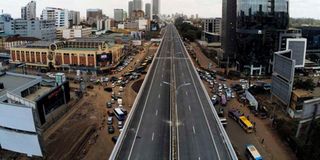
Nairobi Expressway along Waiyaki way, Westlands in this photo taken on April 16, 2022. PHOTO | JEFF ANGOTE | NMG

A new expressway from the outskirts of Nairobi along the Mombasa highway trammeling the edge of the Nairobi city centre, and funneling into the Nakuru highway is nearing completion as at April 2022.

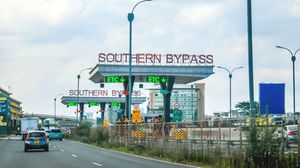
What is unique however are the ubiquitous mandatory toll stations erected after every few kilometers.

With legislation baking in the dying embers in the National Assembly at the tail end of the current term (ending in June 2022), the Government of Kenya hopes to legalize the imposition of a slew of toll fees for motorists bent on using the freeway.

But a freeway it is unlikely to be. The erected toll stations are bound to ensure constant traffic snarl-ups that make nonsense of the very object of the expressway.

Ask Ghanaian Minister for Finance.

In November 2021 while seeking the scrapping of the road toll fees in Ghana, he stated in his budget statement and economic statement: “Mr Speaker, the government is currently charging tolls on some public roads to raise funds for road construction and maintenance. 

"Over the years, however, the tolling points have led to heavy vehicular traffic and lengthened travel time from one place to another, impacting negatively on time and productivity.

"The congestion generated at the tolling points, besides creating these inconveniences, also leads to pollution in and around those vicinities. To address these challenges, the government will zero-rate tolls on all public roads and bridges. This takes effect immediately the budget is approved.

"The tolling points will be removed and the toll collection personnel reassigned. It is anticipated that this policy will help reduce congestion on the tolled roads, allow free flow of vehicles, reduce travel time and the pollution caused by emissions from vehicles in and around the tolling points.

"The expected impact on productivity and reduced environmental pollution will more than offset the revenue foregone from removing the tolls.”

Need we re-invent the wheel?

This is a budgetary decision taken by an African nation faced with similar economic challenges as Kenya, and accosted by similar disturbing pressures of road traffic congestion weighted down by narrowing revenue-generation streams.

The Ghanian decision on officially scrapping road toll fees cannot be said to be irrational, or unwarranted.

Kenya is expending heavy capital investment on "digital" toll booths on the said expressway, without any form of public consultation having been secured in the planning and construction of the expressway.

There is no guarantee that everyone using the tolled expressway will be "smart" e-connected, so as to avoid ugly traffic snarl ups in the event of a user's disconnected network, malfunctioning "reader/scanner" gadgets, or a non-functional booth along the series of such on the expressway, all curtailing smooth traffic flow.

Furthermore, the frequent electric power outages in Kenya portend a potentially catastrophic scenario of massive traffic snarl-ups where power outage cannot be restored immediately to allow seamless functioning of the toll stations continuously, over the stretch of the expressway, throughout the year.

Rainy seasons in Kenya not only peak and orchestrate these unique problems but accentuate them acutely. Perennially.

Nigeria was headed alongside Kenya on the blind path of road-tolling until the suspension of the programme this month.

For Nigeria, 20 years ago the then-president Olesegun Obasanjo did away with road toll fees.

These road toll fees were to be re-introduced on April 16, 2022.

It didn't happen, possibly due to delays in the requisite "infrastructure interconnecting". Time will tell if Nigeria will be persuaded to pursue the Ghanaian choice of no road tolling.

Closer home, in Uganda the roads toll fees collection misadventure commenced in January 2022 along the Chinese-built Kampala-Entebbe road.

Apparently, this was to be a pilot project. Perhaps it was to be limited to this particular Ugandan road. But, and surprise surprise, according to General Katumba Wamala, the Minister in charge of the Roads docket in Uganda, "all the expressways that the country is constructing will be toll roads."

So Ugandan (and any visitors to Uganda) road users will henceforth brace themselves for toll fees while driving on Uganda roads. This obviously will increase road transportation costs, whichever way one looks at it, having a direct impact on the cost of products that are principally road-freighted.

This issue of costs is intrinsically tied to the imposed road tax every Kenyan road user remits to the Exchequer vide the fuel levy collected at every fueling point in Kenya.

The Road Maintenance Levy Act of 1993 imposes a levy of about Sh19 for every litre of petrol bought at the pump in Kenya.

Double taxation

An increase in this levy was made on April 15, 2022, to Kenyan taxes (allegedly to maintain and construct new roads) out of every litre of fuel consumed. What then is this double taxation imposed on one to use a public road via additional ‘toll fees’?

The Ghanian decision was met with hostility from many quarters with the perennial expected vested interests cloaked as "concerns" regarding the said decision who questioned the legality of the same shouted themselves hoarse in futile protest.

It is no surprise that in Kenya, these same deep and dark vested interests will rear their ugly heads; they certainly will pay no regard to the negative consequences of the proposed road tolling to be rolled out in what will surely be double taxation.

These interests (often under the leash and Pavlov-control of buccaneering puppetmasters) care nothing about the long-term consequences of appeasing their dark demons of greed and avarice.

Possessed to the core, it is until the heavy cost such as paid by Ghana before it saw the light, that will drive the sense in these mandarins to ultimately act to lift the yoke of such road-tolling off the necks of Kenya's road users.

Kinyanjui is an Advocate of the High Court of Kenya

PAYE Tax Calculator

Note: The results are not exact but very close to the actual.