Why it makes sense to look inward for funding

If the global financial architecture refuses to evolve, then Kenya’s decision to bring in the architect of Africa’s emerging financial order is not merely a policy choice; it is an act of necessity.

Photo credit: Shutterstock

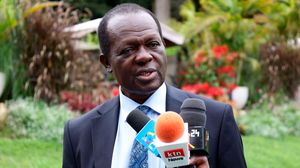
Many observers did not fully grasp the symbolism and significance of the appointment of Benedict Oramah as chairman of the Governing Council of Kenya’s newly created National Infrastructure Fund earlier this year.

Prof Oramah is not merely a distinguished name for a letterhead; he is the architect of the most consequential experiment in African financial self-reliance of the last decade. Under his leadership, African Export-Import Bank’s balance sheet grew almost eightfold, from $6 billion to nearly $44 billion by the time he concluded his tenure in October 2025.

President William Ruto’s administration is experimenting with a bold idea. It is signaling that Kenya is no longer content to play by the old rules of the global financial architecture. Whether the experiment will work remains to be seen.

In early 2023, when the Ruto administration was confronted with crippling fiscal distress and looming spectre of default, it did not simply queue up at the traditional Western creditor windows. It turned instead to Afreximbank and the Trade and Development Bank (TDB), the financial arm of Comesa, for emergency liquidity support.

Was this merely an act of desperation? Perhaps. But the move also reflected a broader continental repositioning, born of a growing recognition among African leaders that the continent’s development cannot remain permanently mortgaged to institutions such as the International Monetary Fund and the World Bank, whose governance structures, voting weights, and risk frameworks were designed in a different era and for different purposes.

Under Oramah’s stewardship, Afreximbank launched the Pan-African Payment and Settlement System (PAPSS), whose ambition is to enable cross-border trade in local currencies across more than twenty African countries. The bank also financed African nations through the Covid-19 pandemic at a time when many traditional creditors retreated inward to focus on their own domestic crises.

As was to be expected, this new direction has now set Kenya on a collision course with the IMF. The tension currently unfolding is not about the usual headline-grabbing disputes over budget cuts, tax increases, subsidy removals, or inflation targeting.

At its core lies a fundamental accounting question: how should Kenya classify loans raised through securitisation of dedicated government revenue streams?

The IMF insists that these securitisation loans should be recorded as sovereign debt. Kenya’s National Treasury insists on treating them as corporate or private liabilities kept off the sovereign balance sheet.

Kenya is both technically and philosophically correct. When it securitises revenues from road maintenance fuel levy to fund road projects, or pledges income from the Sports Fund to finance Talanta Stadium, it is not borrowing against the “full faith and credit” of the Republic. It is monetising specific, ring-fenced future revenue streams.

In a properly executed securitisation, the lender’s recourse is limited to that specific cash flow. It does not extend to general tax revenues or the Consolidated Fund. The risk is therefore transferred from the sovereign to the revenue stream itself. The liability is contingent and bounded, rather than open-ended, as sovereign debt is by definition.

We must also remember that Kenya operates under IMF programme terms that include strict debt ceilings. The moment these securitised liabilities are reclassified as public debt, Kenya’s measured debt burden rises immediately. This occurs without the country borrowing a single additional shilling.

While Kenya’s actual solvency and repayment obligations remain the same, the “reality” perceived by global markets shifts.

In a world governed by financial signals, measurement becomes destiny. Such reclassification affects access to capital markets and shapes the narrative that credit-rating agencies communicate to the world.

Furthermore, future securitisation efforts would become largely pointless. If pledging a dedicated revenue stream produces the same balance-sheet outcome as issuing a conventional Eurobond, there is little incentive to develop more sophisticated, locally rooted, revenue-linked financing structures. The instrument loses its entire rationale, and an important avenue for financial innovation is effectively blocked.

I also detect a degree of hypocrisy in this debate. African governments are repeatedly lectured by the IMF and the World Bank to reduce dependence on external concessional debt and deepen domestic capital markets.

This is precisely the logic underpinning the National Infrastructure Fund that Oramah now leads — a vehicle designed to crowd in private capital and reduce dependence on sovereign borrowing. When Kenya attempts to finance development without placing the full burden of obligation on taxpayers, it is operating in the very spirit of the advice it has long been given.

If the global financial architecture refuses to evolve, then Kenya’s decision to bring in the architect of Africa’s emerging financial order is not merely a policy choice; it is an act of necessity. Perhaps it is time for the IMF to step back and allow the continent’s own institutions to take the lead.

The writer is a former managing editor of The EastAfrican.


PAYE Tax Calculator

Note: The results are not exact but very close to the actual.