Kenya's fuel tax cut: Populism or policy?

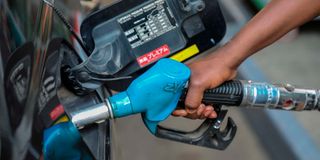
A fuel attendant serves a motorist at a fuelling station on Koinange Street in Nairobi County on August 14, 2025. 

Photo credit: File | Nation Media Group

The outlook for local oil prices had turned increasingly precarious. Kenya’s ambitious government-to-government (G-to-G) oil credit scheme recently faced a major threat after Gulf suppliers moved to invoke “Material Adverse Change” clauses.

These clauses allow for a renegotiation of terms upward when unforeseen circumstances—in this case, the escalating Middle East crisis—disrupt the status quo.
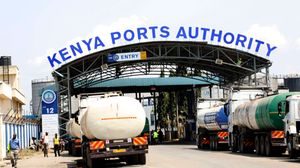
On April 1, Saudi Aramco formally notified the Kenyan government that it intended to seek an upward price review for the period between May and August. The supplier cited regional instability as the primary driver for the shift, potentially undoing the price stability the G-to-G arrangement was designed to provide

Beyond geopolitical shifts, the arrangement was further strained by an internal scandal. It emerged that Kenya had bypassed Gulf partners to sign third-party oil deals.

These "off-book" deals were struck at margins significantly higher than those agreed upon in the G-to-G framework, sparking a diplomatic and commercial rift.

To repair the damage, high-ranking government officials recently travelled to Dubai and Riyadh to provide key assurances. First, Kenya confirmed it has rejected the controversial third-party oil.

Secondly, that disciplinary action has been initiated against Ministry of Petroleum officials involved in the side deals.

Thirdly, the government guaranteed that these unauthorised cargoes were excluded from the latest pricing cycle.

While the mission appears successful—with Gulf suppliers reportedly agreeing to hold current prices for now—the situation remains volatile. As long as the Middle East crisis persists and the Strait of Hormuz remains a vulnerable chokepoint, Kenya’s energy security sits on a knife-edge.

For the immediate future, Kenya's fuel price stability is less a matter of market mechanics and more a result of the diplomatic "benevolence" of its Gulf counterparties. While recent urgent meetings in Dubai and Riyadh have secured a temporary reprieve, the administration’s domestic response has been a blur of uncommon speed.

Within days, a VAT Amendment Bill was drafted, debated and passed in a single parliamentary sitting lasting barely an hour. The Petroleum Development Levy (PDL) was tapped for Sh6.2 billion, and a 50 percent VAT cut was signed into law. The administration calls this crisis management; critics call it populism and fiscal recklessness.

The deployment of the PDL is, strictly speaking, not a subsidy. It is a redistribution of funds already collected from motorists during periods of lower prices—a price-smoothing mechanism.

The VAT cut, however, is a different animal entirely. It is a structural revenue sacrifice, legislated under immense political pressure, with a 90-day window that economic and electoral logic will make nearly impossible to close.

Populism or policy? The timing makes the answer self-evident.

The VAT Amendment Bill arrived the day after the opposition rallied for mass action. The announcement was not made in a Treasury briefing room, but at a political rally in Kisii. With the 2027 election appearing on the horizon, every fiscal decision is now viewed through a populist lens.

The fiscal consequences are profound. Petroleum VAT is not a marginal revenue source; it is a broad-based, volume-driven levy. Halving that rate represents a significant sacrifice at a time when the Treasury is under intense pressure to meet budget targets and satisfy IMF conditions.

The deeper concern is the "exit problem." Fuel VAT was doubled to 16 percent in 2023 as a cornerstone of revenue mobilisation. Reversing it—even temporarily—signals to international partners that Kenya’s revenue commitments are contingent on political weather rather than policy design.

Restoring VAT to 16 percent after July 2026 will require a deliberate legislative act, in an election year, against a consumer base that has already adjusted its expectations downward. The political economy of tax restoration is universally harder than the economics of tax reduction.

If global prices remain elevated past July, the government will face a choice no administration wants in an election year: restore the tax and absorb the political blow, or extend the relief and deepen the fiscal wound. The fact that the new legislation allows for an extension without returning to Parliament tells us everything we need to know about the government's true expectations.

There will also be consequences for Kenya’s relationship with the IMF.

The Fund’s principal concern is Kenya’s primary fiscal balance—the gap between revenue and non-interest expenditure. The 2023 increase in fuel VAT was one of the reforms underpinning the current multi-billion-dollar IMF programme.

Halving the tax now creates a revenue shortfall that the IMF will almost certainly expect the Treasury to offset elsewhere. That means “compensatory measures”: new taxes on other goods and services, reduced development spending, or further austerity. In short, relief at the pump may simply reappear somewhere else in the economy.

If Kenya intends to stay aligned with Bretton Woods prescriptions, consumers may yet discover that every sweetener comes with another bitter pill.

The writer is a former managing editor of The EastAfrican.


PAYE Tax Calculator

Note: The results are not exact but very close to the actual.