Time flies with great content! Renew in to keep enjoying all our premium content.
Prime
The redistribution of inequality
In Kenya today, the middle class bears the brunt. In the name of equality, salaried professionals, small entrepreneurs and business owners increasingly foot the bill for society as a whole.
In a few days, I will be filing my taxes. As always, I find myself asking the quiet question many Kenyans whisper but rarely voice aloud: for what exactly? Does it even matter?
Compliance is not optional. It is a civic duty, enforced by law and softened by the promise of a functioning state.

Recently, the government announced tax relief for the lowest-income cadre. On the surface, it sounds progressive.
In reality, it feels more like political mileage being sought at a time when public trust in institutions is thin. The arithmetic of populism is simple.
Ease the burden at the bottom, speak loudly about inclusion, and hope the applause drowns out deeper structural questions. The deeper question is this: who ultimately carries the load?
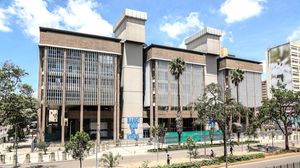
A Central Bank of Kenya report indicated that only a tiny fraction of Kenyans hold a million shillings or more in their bank accounts. That statistic lingers. In an economy where many households struggle with rent, food, school fees and transport, how exactly do people accumulate such savings? Discipline, perhaps.
Restraint? I guess so. We must also recognise that the white-collar thief is not fiction. It is real and distorts the playing field in ways hard work alone cannot correct.
Every society has inherent economic and social inequalities. That much is universal.
The problem arises when the very government entrusted with narrowing inequality is itself entangled in billion-shilling scandals.
When procurement headlines read like crime thrillers, the idea of eliminating inequality becomes fanciful. At best, what we manage is its redistribution.
Justice, fairness, equality. These buzzwords roll easily off the tongues of reformers, whether benevolent or malevolent. Policy reveals intent more honestly than rhetoric.
In Kenya today, the middle class bears the brunt. In the name of equality, salaried professionals, small entrepreneurs and business owners increasingly foot the bill for society as a whole.
The proportion of tax revenue extracted from their pay slips grows heavier while the ultra-rich operate in spaces where loopholes, incentives and creative accounting soften the blow.
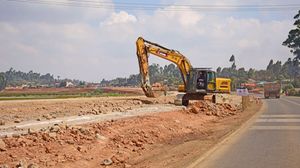
The result is a narrowing corridor where those living in reasonable comfort are taxed to sustain the infrastructure of survival for others, while scandals swallow billions that could have built clinics, roads, and irrigation systems.
Is it fair to level the playing field when the only visible players are already on it?
This is not an argument against supporting the poor. It is an argument for genuine equality of opportunity. If redistribution must happen, let it flow from the powerful to the vulnerable, not from the compliant middle to plug holes created by graft.
It is simple and alarming if we remain asleep at the switch. Other than that, it is a good day to file taxes.
The writer is a climate action enthusiast and a communications specialist at Windward Communications Consultancy.
Unlock a world of exclusive content today!Unlock a world of exclusive content today!