Time flies with great content! Renew in to keep enjoying all our premium content.
Prime
Rethink new tax on creative industry
The government should remove withholding tax on advertising, marketing and creative services in the 2026/2027 Finance Bill, or at the very least suspend it until a functional, time-bound refund system is in place.
A policy introduced to improve tax compliance in 2023 is now doing the opposite.
The five percent withholding tax on advertising, marketing and creative services is steadily choking Kenya’s creative economy. What was intended as a revenue assurance mechanism has instead triggered a chain reaction across the industry: shrinking cash flows, delayed payments, wage stagnation, layoffs and reduced investment in innovation.

The effects have gone beyond marketing agencies and are now visible across the entire value chain, including struggling media houses that depend on advertising revenue to survive. What was initially a theoretical concern has become the stark reality for all businesses in the sector.
Withholding tax systems can work. In economies where they succeed, the common feature is always an efficient, predictable and time-bound refund mechanism. This way, businesses can plan because they know that excess tax credits will be returned within a defined period.
Kenya does not have that system.
Here, the refund process is slow, opaque and underfunded. Even when refunds are approved, disbursements are limited by constrained allocations, leaving companies with little option but to carry forward credits or attempt offsets. In practice, this locks up working capital that businesses need to operate.
The government itself has now acknowledged the scale of the problem.
In its Budget Policy Options for 2026-27, pending tax refunds are formally classified as part of the government’s “pending accruals.” This is not a minor accounting issue. It points to a structural weakness that has persisted for decades.
That same document notes that the accumulation of these accruals has been a concern since the 1990s, with multiple committees formed over the years, but no lasting solution has been implemented.
More importantly, the government also recognises the economic consequences.
Pending accruals, it states, “create a severe economic drag by choking business cash flow, especially for SMEs, leading to reduced operations, layoffs and bankruptcies.” They also strain the banking sector through rising non-performing loans and higher borrowing costs, slowing down economic growth.
This is exactly what the creative industry is experiencing.
Advertising and marketing businesses operate on tight margins and depend on steady cash flow. When a portion of their revenue is withheld and not returned promptly, it disrupts the entire system. Payments to suppliers are delayed. Talent costs are frozen. Growth plans are shelved. Over time, the impact compounds. This is important because advertising is an economic multiplier.
In the US, advertising contributed 18.5 percent of gross domestic product in 2020 and stimulated $2.8 trillion in sales. In the UK, every pound spent on advertising is estimated to generate six pounds in economic value.
The implication is clear for all to see. When you constrain advertising, you muzzle growth across sectors.
Kenya cannot afford to stifle a sector that amplifies every other sector. If we are serious about growth, job creation and innovation, then we must stop taxing the oxygen out of the creative economy.
Kenya’s creative economy has the potential to be a significant driver of jobs, innovation and cultural influence. It supports not just agencies, but also media, production houses, digital platforms and a growing pool of young creative talent.
Yet current policy is holding it back.
I am by no way raising an argument against taxation. Mine is a call for alignment between policy intent and economic reality. If the objective is to increase compliance and revenue, then the system must not undermine the very businesses it seeks to tax. A withholding mechanism without an efficient refund process becomes, in effect, an additional tax on working capital.
Most fellow practitioners will agree that the solution is straightforward.
The government should remove withholding tax on advertising, marketing and creative services in the 2026/2027 Finance Bill, or at the very least suspend it until a functional, time-bound refund system is in place.
This would immediately release liquidity back into the sector, enabling businesses to invest, hire and grow. It would also strengthen the broader economy by revitalising a key enabler of demand across industries.
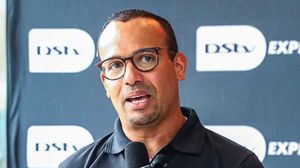
Lenny Nganga is a Council Member and former Chairman of the Association of Practitioners in Advertising (APA)
Unlock a world of exclusive content today!Unlock a world of exclusive content today!