Powering the future or risking it? Kenya’s intent nuclear moment

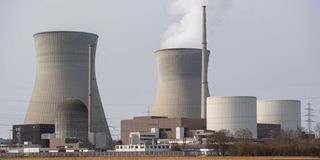
A nuclear power plant. 

Photo credit: File | AFP

Kenya’s energy transition is entering a defining phase, with nuclear power moving from distant ambition to active policy consideration. At the International Conference on Nuclear Energy 2026 held at the Kenyatta International Convention Centre, the government signalled not only intent but growing confidence in its nuclear journey.

Hosting such a high-level global forum is significant. It reflects rising international recognition of Kenya as a serious player in the nuclear energy space. Convening global experts, regulators and industry leaders in Nairobi signals trust in the country’s institutional progress and opens doors for technical partnerships, financing discussions and long-term collaboration.
In the nuclear sector, no country succeeds in isolation, and this visibility places Kenya within a global network of support and accountability.

From the government’s standpoint, the targets are ambitious but deliberate. Kenya plans to scale electricity generation to 10,000MW, with nuclear contributing up to 3,000MW. A 2,000MW plant in Siaya forms part of this long-term roadmap. The objective is to secure stable baseload power to underpin industrialisation while complementing the country’s strong renewable energy base.

At the centre of this transition is the Nuclear Power and Energy Agency (NUPEA), mandated to drive nuclear development. NUPEA has led feasibility studies, site assessments and public engagement, laying the groundwork for Kenya’s entry into nuclear power.

Alongside this, Kenya Electricity Generating Company has been identified as the prospective owner-operator, anchoring the project within an experienced national utility.

Guidance from the International Atomic Energy Agency continues to shape progress, with Kenya currently in Phase Two of the Milestones Approach. This phase focuses on building the legal, regulatory and human resource capacity required before construction begins. Reaching this stage is an achievement, yet it marks the start of more demanding work.

Nuclear energy is not simply an infrastructure project; it is a governance test. A robust, independent regulator must be empowered to enforce safety standards without political or commercial interference.

Financing models must be transparent and sustainable given the scale of investment. Public trust must be built through consistent engagement, particularly in host communities such as Siaya.

Human capacity will equally determine success. Engineers, regulators and safety experts must be trained to global standards, with systems in place to retain this expertise over decades. Kenya’s hosting of ICoNE 2026 signals it is no longer on the periphery of nuclear conversations but stepping firmly into the arena.

The writer is a climate action enthusiast and a communications specialist at Windward Communications Consultancy.

PAYE Tax Calculator

Note: The results are not exact but very close to the actual.