New e‑procurement system is worth it

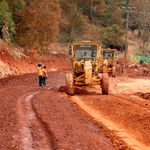
Road construction in Bomet East on September 16, 2025. Kenya’s payment of Sh56.9 billion in pending bills has revived road projects and lifted construction growth.

Photo credit: Vitalis Kimutai | Nation Media Group

Public procurement is the primary mechanism through which governments acquire the products, works, and services necessary for the provision of public goods. In Kenya, public procurement accounts for about 60 percent of its annual budget. This has contributed to the rapid expansion of government size, which has crowded out private development and, slowing growth.

Yet, public procurement has been cited as a major driver of corruption, according to the Corruption Perceptions Index of Transparency International, which ranked Kenya 121st out of 180 countries. Consequently, public procurement has been consistently ridiculed and condemned by the public.

To erase this blemish, the government is implementing a transformative e-Government Procurement (e-GP), an internet-based system that digitises the entire lifecycle of public procurement, from planning and sourcing to contract management and payment.

This is a major departure from the digital transformation of public procurement systems anchored on the Integrated Financial Management Information System (IFMIS).

While IFMIS improved transparency, reduced procurement cycle and enhanced auditability, limited user training, inconsistent system across counties and technical failures hindered its full potential.

The e-GP reform represents a shift to a full procurement lifecycle platform, covering planning, tender publication, bid submission, evaluation workflows, awards and contract management in a standardised and traceable environment.

Digitising the procurement trail improves oversight because it becomes easier to track actions, timelines and decision points, enabling earlier detection of red flags such as repeated awards, single bid tenders, unusual submission patterns and repeated cancellations and re tendering.

The system interfaces with other government platforms to streamline compliance and verification, including systems supporting financial management, tax compliance as well as contractor and business registration.

The Kenya Public Expenditure Review estimates that improving efficiency and competition in procurement could deliver about Sh85.9 billion in savings, equivalent to about 0.9 percent of gross domestic product.

The expected gains from digitisation include reduced printing and document handling, fewer travel requirements for bid submission, lower administrative overheads, and shorter cycle times as workflows become standardised and automated.

These benefits notwithstanding, the uptake of e-GP has been challenging. It turned out that its operations are technically unfriendly, submission of budgets and uploads of government agencies are not simultaneous, heterogeneous ICT infrastructure, human capacity gaps and lethargy to change.

Granted that Kenya is a bastion of digital revolution, these bottlenecks are surmountable. E-GP can and will deliver value for money to improve service delivery. It is all worth it.

The writers are public policy analysts at the Kenya Institute for Public Policy Research and Analysis (Kippra).

PAYE Tax Calculator

Note: The results are not exact but very close to the actual.