As governments in Africa race to expand infrastructure, increase food production and attract investment, a silent crisis continues to undermine these ambitions: land degradation.
Every year, millions of hectares of productive land are lost to soil erosion, deforestation, overgrazing, unsustainable farming practices and poorly planned urban expansion.
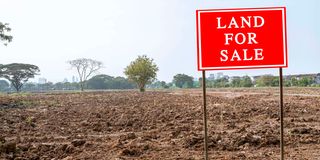
The result is declining agricultural productivity, increased food insecurity, biodiversity loss and heightened vulnerability to climate shocks.
Recognising this challenge, the global community adopted the concept of Land Degradation Neutrality (LDN) under Sustainable Development Goal 15.3.
The idea is simple yet transformative: the amount and quality of healthy, productive land should remain stable or increase over time. In practical terms, any degradation caused by development activities should be balanced by restoring an equivalent area of degraded land.
More than 130 countries, including Kenya, have voluntarily committed to achieving LDN by 2030.
The framework follows a straightforward hierarchy: avoid degradation where possible, reduce degradation where it occurs and restore degraded landscapes where damage has already been done.
What makes LDN particularly powerful is its ability to connect multiple development priorities under a single framework. Healthy land supports food production, regulates water systems, stores carbon, conserves biodiversity and sustains rural livelihoods.
Investing in land restoration is, therefore, not merely an environmental intervention but an economic necessity.
Progress towards LDN is measured using three globally recognised indicators: land cover change, land productivity and soil organic carbon. Together, these metrics provide a clear picture of whether landscapes are becoming healthier or more degraded over time.
For Kenya and many other African countries, achieving LDN will require moving beyond tree planting campaigns to embrace integrated landscape management. Sustainable agriculture, agroforestry, community-based forest management and responsible grazing practices must become central pillars of national development strategies.
The private sector also has a critical role to play. Financial institutions, agribusinesses and investors increasingly recognise that degraded landscapes present significant business risks. Supporting restoration initiatives can strengthen supply chains, improve resilience and unlock emerging opportunities in carbon markets and ecosystem services.
Importantly, LDN offers a practical framework for balancing development and conservation. Rather than viewing environmental protection as an obstacle to economic growth, it demonstrates that long-term prosperity depends on maintaining the natural capital upon which economies are built.
The future of Africa's economies depend on the health of the land beneath our feet.
As the effects of climate change intensify across Africa's drylands, forests and agricultural regions, restoring degraded land is no longer optional. It is essential.
The road to 2030 is rapidly shortening. If African countries are to achieve their climate, biodiversity and food security goals, land degradation neutrality must move from being an international commitment on paper to a guiding principle for development planning and investment decisions.
The writer is a climate action enthusiast and a communications specialist at Windward Communications Consultancy.
Unlock a world of exclusive content today!Unlock a world of exclusive content today!