Misinformation in Kenya's food systems must be tackled head-on

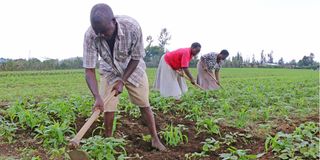
Farmers from Kapkuress in Nakuru County weed their maize and beans crop on April 23, 2024.

Photo credit: File | Nation Media Group

In this digital age, information travels faster than it can be verified. As Kenya pushes forward on complex agendas like food systems transformation, one threat looms larger than most—misinformation.

Interests and perspectives differ on diverse topics from seed sovereignty, vaccinations, to bio-inputs promotion.
During the 2nd National Agroecology Symposium, held at the Kenya School of Monetary Studies from July 10-11, a stand-out side event organised by the Deutsche Gesellschaft für Internationale Zusammenarbeit (GIZ), under the Global Project for Sustainable Agricultural Systems and Policies (AgSys), tackled this very issue.

The session, themed “Understanding the potential and impacts of misinformation in key food systems discourses,” offered a timely and sobering reflection on how unchecked narratives are derailing progress.

From WhatsApp groups to social media feeds, misinformation about agriculture, climate and food safety spreads unchecked. Sometimes emotional, often distorted, and rarely verified, this content gains traction because it is fast and sensational. Fake news, studies show, spreads six times faster than factual information.

In Kenya’s agricultural sector, this phenomenon has become dangerously evident in the ongoing debate around the Seeds and Plant Varieties Act.

Many farmers believe the law completely bans seed saving and sharing, or worse, that they could be fined or arrested for exchanging indigenous seed varieties. While some argue the law protects multinational seed interests, others assert it shields farmers from counterfeit varieties.

The GIZ-led session provided a rare space for structured debate, evidence-based moderation, and audience engagement. It unpacked common misconceptions, clarified the law’s intentions, and highlighted real barriers like the prohibitive cost and complexity of registering farmer-managed seeds.

Farmer-managed seed systems and formal breeder systems need not be in conflict. Instead, they can coexist to offer farmers greater choice and autonomy.

Misinformation in food systems does not always come from bad actors. It often spreads through gaps in interpretation, legal language that is hard to access, and limited public awareness.

In emotional and high-stakes conversations, even subtle misreadings can snowball into strong public opinions. This is what makes the misinformation problem so dangerous.

The implications are far-reaching. When misinformation distorts critical policy debates, it weakens the uptake of legitimate innovations; fuels food-related panic for consumers, leads to wrong production decisions for farmers and makes evidence-based regulation nearly impossible for policymakers.

Kenya has an opportunity to learn from the efforts of other countries tackling these challenges and invest in similar, context-specific solutions.

GIZ’s effort to use the seed law debate as a teaching moment is a commendable model. Such honest and open dialogues, rooted in data, law, and lived experience, are urgently needed in agroecological transitions.

Misinformation continues to spread rapidly through digital channels, and there is a need for digital literacy for rural users who often lack this to verify content or detect false claims.

Bridging the gap between legal frameworks and the people most affected by them is also essential. Without a clear, consistent interpretation of laws, confusion and mistrust will persist.

India has launched multilingual campaigns to dispel myths around genetically modified crops and pesticide use. In Brazil, farmer cooperatives are working with fact-checking initiatives to counter misinformation related to agrochemicals and soil health. Meanwhile, Senegal is building long-term awareness by integrating agroecological education into secondary school curricula.

As we continue to push for food systems transformation, we must remain alert to how misinformation operates. The digital era makes it easy to share incomplete or emotionally charged narratives. What if we are wrong about what we are sharing? What if we need more information? What if we need to hear the other side?

Kenya’s food system is at a turning point. To move forward, we must not only get the policy right. We must also get the information right.

PAYE Tax Calculator

Note: The results are not exact but very close to the actual.