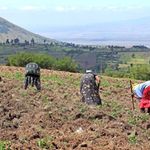
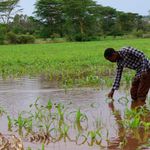
The 2nd National Agroecology Symposium, held from 10–11 July 2025 at the Kenya School of Monetary Studies, brought together a powerful coalition of voices—farmers, researchers, policymakers, civil society, and private sector players.
Their message was clear: agroecology is not just a solution, it is the solution.
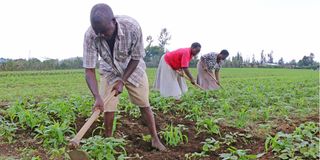
Among the key contributors was the World Resources Institute (WRI), a leader in evidence-based land restoration and food systems. Dr Susan Chomba, Director of Food, Land and Water at WRI Africa, made a compelling case for agroecology as central to climate resilience, food security, and economic stability.
WRI’s approach uses data, research, and partnerships to drive solutions for urgent challenges, especially around food systems transformation and land restoration.
They gather evidence on land degradation, design appropriate interventions, and track results to ensure ecosystem services like food, water, and climate benefits are delivered.
In Kenya, WRI has already invested Sh1 billion in regenerative agriculture and restoration efforts in the Greater Rift Valley.
This work includes advocating blended financing models. While policy targets 10 percent of GDP for agriculture, actual investment is less than 4.0 percent. Agroecology cannot rely on goodwill alone.
A stacked approach that integrates crops, trees, carbon, and water, and rewards farmers for soil restoration, is essential.
Government data reinforces the need for change. Since 1990, maize yields have declined even as fertiliser use increased by 36 percent.
The problem lies in degraded soils and poor water management. Agroecology addresses this by restoring soil organic carbon and reducing reliance on costly chemical inputs.
Agroecology is more than a farming method because it restores power to farmers, honours indigenous knowledge, and builds seed sovereignty. It also creates jobs for young people through composting, organic input production, and direct-to-consumer food systems. Agroecology draws from indigenous knowledge systems, where farming is deeply connected to nature and culture.
In some communities, like the Agikuyu, seasons are named after crops, such as the season of sorghum, reflecting a deep understanding of agricultural cycles. Practices like seed saving and sharing are part of communal life.
Introducing cultural food days in counties can help revive pride in local cuisines. Educating consumers on the health benefits of organically grown produce, cultivated without synthetic inputs, can shift mindsets and build wider support for agroecological farming.
WRI’s model shows that agroecology is not a quick fix. It is the right fix. It delivers results, builds resilience, and restores dignity. Kenya must now respond with policy support, targeted investment, and public awareness.
The future of our food, soils, and climate depends on it. We already have the knowledge and tools. What remains is the political will to act.
The writer is a climate action enthusiast and a communications specialist at Windward Communications Consultancy.
Unlock a world of exclusive content today!Unlock a world of exclusive content today!