Last month, I was in Washington DC to attend the meeting by the International Atomic Energy Agency and the US government on the Atomic Technologies Licensed for Applications at Sea (ATLAS).
The event focused on the future use of nuclear technologies in maritime sector. Its hosting in Washington was symbolic. A city is more than a collection of buildings and paved roads.
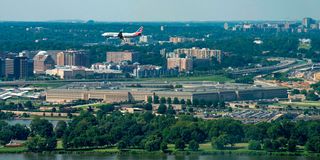
It is a testament to a nation’s long-term vision, values, and governance. For a rapidly growing metropolis such as Nairobi and a developing nation such as Kenya, the American capital offers a masterclass in infrastructure that endures.
The first striking feature of Washington DC is its grid-like, spacious road network. The wide avenues are designed not just for the traffic of today, but for generations to come, seamlessly integrated with highly functional traffic light systems that keep the city moving.
Interspersed between these thoroughfares are vast, pristine parks and green spaces that double as open-air museums. These spaces highlight the nation’s history and its heroes, serving as constant reminders of the visual and cultural identity of the American people.
At the center of it all stands the landmark Washington Monument. Acting as the capital’s literal and metaphorical compass, city planners designed the district so that no building could overshadow this towering obelisk, ensuring the skyline remains open and orderly. This deliberate spatial discipline is a stark reminder of what Nairobi lacks: rigid adherence to a master plan that resists ad-hoc developer exploitation.
I had the privilege of touring the US Congress. The Capitol building is an architectural marvel whose history is as rich as the democracy it houses. Designed originally by William Thornton and later expanded by successive architects, its construction began in 1793. From its iconic cast-iron dome to its grand rotunda, it was built with the explicit philosophy that no expense should be spared.
The early builders understood that the seat of their democracy needed to inspire awe and command permanence. Centuries later, those enduring stone walls still stand, proving that high initial capital investment yields invaluable long-term national dividends.
This commitment to generational infrastructure is the exact wake-up call Kenya needs. We must shift our mindset away from temporary, stop-gap measures and begin investing in foundational projects built to last centuries.
At the Nuclear Power and Energy Agency (NuPEA), we view the development of Kenya’s first nuclear power plant through this exact lens. Nuclear energy infrastructure represents the pinnacle of long-term planning—facilities built to provide clean, reliable baseload power for 100 years, anchoring our industrialisation for the next century.
Also, DC’s urban canopy highlights the indispensable value of urban forestry. The city’s lush, expansive forests act as carbon sinks and natural cooling systems, proving that environmental preservation must co-exist with brick and mortar. This aligns with President William Ruto’s climate vision to plant 15 billion trees in Kenya by 2032.
Integrating robust forest networks into our national and county planning is not an alternative to development; it is a prerequisite for it. If Kenya is to achieve its economic potential, our city planners, engineers, and policymakers must start building for the next millennium.
Washington DC proves that when you do not spare expenses on quality, and when you align infrastructure with ecological and visionary planning, you build a nation that stands the test of time.
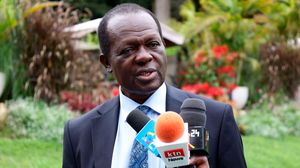
The writer is the Chief Executive Officer of the Nuclear Power and Energy Agency (NuPEA).