Knowledge diversity and education access can drive Kenya to prosperity

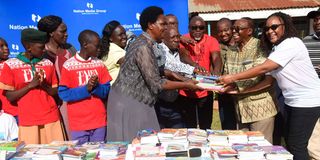
Nation Media Group’s statf during presentation of text books and other learning material at Kaptuktuk Primary School in Eldoret City, Uasin Gishu County on September 13, 2024.

Photo credit: File | Nation Media Group

As Kenya transitions to the Competency-Based Education (CBE) system, it is important to keep two key priorities in sharp focus. First, we need to explore alternative knowledge avenues. Second, we must collectively work towards increasing access to education for all.

These are some of the ideas discussed at the Nairobi Litfest 2025, an annual celebration of art, culture, and ideas held in our public libraries.
These twin ideas are important because, if fully implemented, they have the potential to grow the economy and, in the process, uplift lives and livelihoods. Let’s delve into how these ideas can be transformative.

First, exploring alternative knowledge systems could not be timelier. The challenges we face today require us to think differently.

The most powerful answers will not always come from where we have always looked but from fresh ideas, local voices, and stronger community ties.

For instance, Kenya's 2017 ban on plastic bags successfully encouraged the use of more sustainable packaging materials.

However, this transition could have been a greater opportunity to leverage alternative knowledge systems, such as traditional knowledge in producing the kiondoo, Kenya's handwoven basket.

Perhaps a greater use of kiondoos would have created more local opportunities for weavers and at the same time encouraged the passing down of this traditional skill as opposed to seeking modern packaging alternatives.

Again, are there traditional solutions we can explore to solve some of today’s challenges in healthcare, food production, and construction. Embracing and exploring alternative knowledge systems in our CBE can potentially open new economic opportunities.

Numerous studies consistently demonstrate a significant return on investment for society as a whole when a country prioritizes and invests in education.

A report by Unesco, OECD, and the Commonwealth Secretariat on the monetary costs to economies around the world of leaving children and youth behind in education showed that underinvesting in the sector is expected to cost governments trillions of dollars.

The report titled The price of inaction: The global private, fiscal and social costs of children and youth not learning found that low investment in education has a direct impact on the economy.

The report estimates the global costs of children achieving less than basic skills at $10 trillion.

These include direct impacts like reduced income and productivity, as well as broader fiscal effects such as decreased tax revenue and increased public spending on social issues like health and law enforcement.

For example, girls without basic skills are more likely to experience early pregnancies, and the incidence of crime increases when children leave school early or have less than basic skills.

Fortunately, Kenya has shown great commitment towards education. For the 2025-2026 fiscal year the Treasury allocated Sh702.7 Billion to education, which represents approximately 16.6 percent of the Sh4.239 Trillion national budget.

But the government cannot do it alone. The private sector must supplement educational efforts. From our experience at Text Book Centre, we have found one way of advancing the above goals is through partnerships such as the one we have with Nairobi Litfest.

Such festivals directly advance reading culture and spotlight local authors, young readers, and community-driven knowledge.

Let us build a future where alternative knowledge systems are not only explored but celebrated, shared, and lived and at the same time no child, no voice, no community is left behind.

The writer is Head of Retail, Text Book Centre. Email: [email protected]

PAYE Tax Calculator

Note: The results are not exact but very close to the actual.