Kairos moment: Timing, not targets, will shape Africa’s climate future

Climate action in Africa is not just about planning, but about seizing critical moments to drive lasting resilience.

Photo credit: Shutterstock

Last month, I had the opportunity to attend a meeting of environmental journalists and scientists convened on the University of Illinois Chicago, United States.

It was an intense and enriching experience, engaging with thousands of journalists, scientists, and editors from across the world committed to telling the story of climate change.
One idea stayed with me as I reflected on the conversations: climate action is not only about ambition or planning; it is about timing.

The ancient Greeks had a distinct way of understanding time. They spoke of chronos and kairos. Chronos referred to measurable, sequential time, what we might call quantitative time, the kind that can be counted, scheduled, and planned. Kairos, on the other hand, was qualitative. It described the opportune moment, a critical window when conditions align, and action becomes most effective.

Chronos has largely shaped Africa’s climate response. We have policies, timelines, and targets. Kenya, for instance, has made notable progress in renewable energy and climate planning, aligning with global commitments and long-term strategies. These are important foundations.

However, chronos alone does not deliver change. Real progress often depends on kairos, recognising and acting within moments when urgency, public attention, and political will converge.

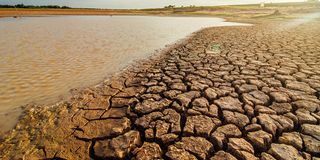
Consider, for instance, the chronic drought in Turkana. Each cycle follows a familiar pattern: early warnings, emergency response, and humanitarian support. This is structured and necessary. Yet each drought also creates a kairos moment, when the full weight of climate vulnerability is visible and when bold decisions are most possible.

These moments should not end with temporary relief. They should trigger permanent solutions. Investments in water systems, climate-resilient livelihoods, and long-term planning should be accelerated when urgency is highest. This is where adaptation must take root, and where mitigation strategies, including sustainable land use and ecosystem restoration, can be embedded for the future.

The same applies to the recurrent flooding in Nairobi city. Each rainy season exposes long-standing gaps in urban planning and infrastructure. Recognising and overcoming barriers such as political inertia or resource constraints is essential to driving structural change during these kairos moments, not just short-term fixes.

Africa does not lack frameworks. It has chronos. Strengthening the ability to act within kairos can inspire confidence that moments of crisis can lead to lasting change.

Climate action is not just about meeting timelines; It is about recognising when the moment demands more, and ensuring that response leads not to recovery alone, but to resilience.

The writer is a climate action enthusiast and a communications specialist at Windward Communications Consultancy. Email: [email protected]

PAYE Tax Calculator

Note: The results are not exact but very close to the actual.