How to re-sweeten Kenyan sugar sector

The entrance to Nzoia Sugar Factory in Bungoma County.

Photo credit: File | Nation Media Group

Bitterness has been generated in the sweet sugar industry following the leasing of the sugar companies, that is Nzoia, Chemelil, Muhoroni among others.

The anger expressed by the Western Kenya politicians and the demonstrations by the sugar farmers and workers have reached fever pitch.
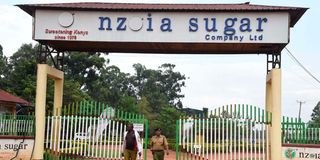

This war began immediately President William Ruto took over office. In the first Cabinet he chaired as the fifth President of Kenya, Dr Ruto approved the privatisation of sugar mills.

Though he later agreed to revive the sugar mills, he nevertheless ordered the sugar plants closed till December 31, 2023, and now he has declared that they need to leased.

The sugar industry is one of the most important agricultural sectors in (former) Western and Nyanza provinces. In 1997, it employed 35,000 workers, was a major source of income to over 100,000 small scale farmers and supported over two million people. Sadly, by 2000, the number of people employed had reduced to 10,552.

The status of sugarcane as a source of livelihood and viable economic pillar is now under threat. This is unfortunate since what is Richman’s crop in other countries, is poor man’s crop in Kenya.

The top five sugar-producing countries in the world are Brazil, India, Thailand, China, and the United States and all of them are advanced economies driven by sugar.

The challenges facing the industry can be as many as the people you ask. However, they can be divided into three main categories namely: Policy and marketing problems , poor cane-husbandry practices at farm level leading to low yields both in quantity per hectare and in sucrose content, and low productivity at factory level- leading to low income to farmers due to low sugar yields.

But at the root of all these challenges is corruption, through which cartels thrive in importing illegal sugar into the country, and mismanagement of factories, which include flawed tendering processes.

The worst part of mismanagement has been “company incest”. In this, intra-company marriages abound. This arrangement kills accountability in management and breeds corruption and favouritism. Many companies have collapsed as a result, Sony Sugar being an important case study.

Whereas CIF landed prices of imported sugar retails at about Sh75 per kilogramme, Kenyan sugar at the factory gate is sold at about Sh125 per kilogramme. This is because of the unfavourable macro-economic and microeconomic factors stated above, coupled with mismanagement and corruption.

It is a pity that whereas countries like Brazil produce 1 tonne of sugar by crushing 6 tonnes of sugarcane, Kenyan mills have to crush 16 to 17 tonnes of sugarcane to get 1 tonne of sugar. But why this discrepancy? It is all to do with enough water and good soil.

To this, add a pinch of political goodwill and our production may even surpass that of Brazil! Remember that due to France’s natural climatic conditions, good wine used to be synonymous with France.

Instead of envying France, America and Australia genetically modified their grapes, thus beating French wine both in quantity and quality. Likewise, Kenya only needs to make up her mind on its priorities.

Good practices in sugar manufacturing need to be adopted.

First, reuse of waste and by-products from sugar manufacturing process such as bagasse, filter cake and molasses could help boost profitability, in addition to reducing production costs and environmental impact.

Bagasse can be used for pulp production, for feeding confined cattle and as fuel for boilers...while molasses can be turned into ethyl alcohol, which is raw material for the production of protein, animal feed, pressed yeast for baking and antibiotics.

Second, preventive maintenance in the off season could be adopted. The sugar production season normally starts in mid-May and can last until November, thus making the period between December and April the ‘off-season’.

At this time, it is important for the sugar producer to plan preventive maintenance actions at the plant. This helps reduce the occurrence of future problems, failures, interruptions and possible unnecessary stops of steam turbines.

Third, it would be beneficial to invest in smart technologies. The sugar producers must observe innovations to improve manufacturing process and achieve the best yields.

The fourth entails cost reduction in sugarcane logistics. Industry data indicates that the cutting, trans-shipment and transport stage of sugarcane is equivalent to 28 percent of the cost of a tonne of cane and 10 percent of the value of each bag. These numbers alone demonstrate how important it is to look for ways of optimising this step.

Fifth, is to partner with manufacturing firms such as Indumak Solutions so as to optimize the packaging step. Indumak is singled out since it offers a complete line of equipment to automate each stage of sugar packaging.

In an environment free from corruption, political interference and mismanagement, these best practices can help the sugar industry to once again be as sweet as it was back in 1997 and sweeter than Brazil, USA, Thailand, India and China.

These include dosers, packers, balers, complete palletizing systems and accessories that add speed to the process and collaborate for stricter quality control within the manufacturing plant. It’s a cost-effective investment which can help transform the sugar industry.

The writer is Deputy Vice Chancellor, Resource Mobilisation and Enterprise Development, Uzima University

PAYE Tax Calculator

Note: The results are not exact but very close to the actual.