How manufacturing companies can spur sustainable agriculture

In advanced agricultural economies such as India and Brazil, the manufacturing sector plays a vital role in ensuring farmers’ fortunes are safeguarded, by reducing the rate of post-harvest losses.

Photo credit: Shutterstock

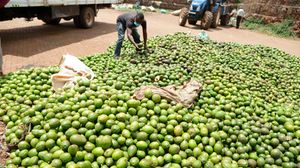
Despite the growing demand for fresh fruit among Kenyan households, driven by heightened awareness on the importance of eating healthy since Covid-19 struck five years ago, many smallholder farmers still grapple with access to market challenges.

According to official data, more than 50 percent of the fruit grown in Kenya is either left to rot due to broken links between farmers and market, lost in transit, or rejected for minor imperfections, leaving farmers in poverty.

Seeing as it is the backbone of our economy, contributing more than 25 percent of our gross domestic product (GDP) and employing more than 70 percent of the population, robust mechanisms must be put in place to support the agricultural sector.

In advanced agricultural economies such as India and Brazil, the manufacturing sector plays a vital role in ensuring farmers’ fortunes are safeguarded, by reducing the rate of post-harvest losses.

From sourcing raw materials directly from farmers, to using what’s available in season and turning surplus into value, manufacturers in these countries contribute largely to sustainable agriculture.

Although much progress has been made in Kenya lately, there is still a huge disconnect between the activities of smallholder farmers and agro-processors, one that is undermining efforts to curb post-harvest losses. Sustainable sourcing models such as contract farming, can be leveraged to offer farmers an assured market and fixed prices for their produce throughout the contract period.

This stability will enable farmers to invest in their farming confidently, improving their livelihoods and those of the many other people who work on their farms. Since fruit farmers produce seasonal products that are bound to rot quickly, sourcing goods directly from them for further processing and preservation can ensure there is less food waste.

Strategic collaborations with national aggregators can ensure that small-scale farmers gain access to larger markets and benefit from economies of scale. Aggregators can provide essential services such as bulk storage, processing, packaging and distributio, reducing post-harvest losses and increasing profitability.

These engagements will help to foster continuous learning and improvement, building a strong sense of community and shared purpose.

By working with national aggregators, farmers reduce marketing costs, secure consistent buyers and ensure their produce meets the quality standards required for both local and export markets.

Processed products can be sold in supermarkets, export markets and online platforms, unlike raw produce, which is mainly sold in local markets.

Manufacturers can also organise farmer field days or deploy dedicated field staff regularly to engage farmers and develop their capacity to produce goods that meet market expectations.

The writer is the CEO, Africa Originals

PAYE Tax Calculator

Note: The results are not exact but very close to the actual.