High self-belief leads to better performance

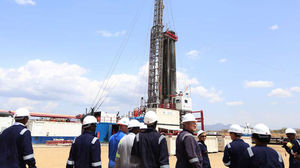
Kenya Revenue Authority (KRA) officials and media during a familiarisation tour of the Marine Unit at Kisumu Port on October 29, 2025.

Photo credit: Alex Odhiambo | Nation Media Group

Self-belief and performance have a reciprocal, circular relationship. This mastery flywheel is a self-reinforcing, virtuous cycle, where consistent, compounding investments in learning and skill development lead to higher competence, which in turn generate greater, more interesting opportunities, success and reputation.

As a model for career or personal growth, it goes beyond the traditional, linear career ladder, into a system that accelerates in speed and impact over time.

High self-belief leads to better performance. Performance outcomes also shape future self-belief significantly. Often referred to in psychology as self-efficacy, self-belief improves performance through several key mechanisms.

First, individuals who believe they can succeed are more likely to work harder and persist longer when facing difficult tasks. Strong self-belief leads to more effort and persistence.

Second, confident individuals view difficult tasks as challenges to be mastered rather than threats to be avoided.

Third, it regulates anxiety – strong self-belief buffers the negative physical and emotional effects of stress. It has been shown to correlate with lower levels of the stress hormone cortisol. The hormone can impair performance.

Fourth, it positively affects goal setting – those with high self-efficacy set more ambitious goals and maintain a stronger commitment to achieving them.

We discussed these ideas briefly with 630 Form Four students at Kagumo High School on Monday.

A team of managers and I had gone to Kafao aka Kags, to launch the Kenya Revenue Authority (KRA)’s Alma Mater Visits Programme. As part of our Pearl Jubilee celebrations, we will visit 31 schools where we studied, starting with Alliance High.

We hope to inspire students, promote tax education, support establishment of tax clubs and strengthen partnership with learning institutions.

The young gentlemen were full of questions. They wanted to know what courses lead one to a career at the KRA, whether authority employees pay taxes, how exemptions come about and how one gets on the board. They wanted to know about our technology, and if we have ever been hacked. We explained.

KRA frequently ranks in the various top five categories globally. We are often commended for our citizen engagement, technology and as the best place to work.

We ranked fifth best employer in Kenya in 2024, re-known for our professional development and mentorship programmes for our 9,000+ employees.

Similar to Australia's Tax Agency, we use chatbots to handle inquiries 24/7 and assist with filing returns. Like Mexico and South Korea, we use real-time validation to cross-reference expenses and income instantly (eTIMS). A regional technology leader, we are using API integration to sync tax filing directly with third-party business platforms.

The social cognitive theory suggests that past successes are the most powerful source of self-belief. Achieving a goal provides tangible evidence of capability, which reinforces and raises self-belief for future tasks.

Failure can weaken self-belief, especially if an individual lacks resilience.

However, those with high self-belief tend to attribute failures to insufficient effort or external factors, allowing them to recover quickly. That is why leading corporate managers always remind their teams to celebrate success.

The link between self-belief and performance, however, has limitations. Excessive self-belief can lead to complacency, under-preparation and risk-taking, which may degrade performance.

Therefore, an inverted U-shaped relationship, where a pinch of self-doubt is beneficial by signalling a need for increased effort and focus, is a better model. High self-believers are resilient, viewing failure as a lesson.

Low self-believers avoid, seeing failure as a personal flaw.

High self-believers are proactive. The opposite is true for low self-believers. Their level of initiative is low, tending to procrastinate. Self-believers are likely to use tools like visualisation. When in teams, their confidence can be contagious, inspiring others. Low self-believers withdraw and display insecure behaviour.

Similar to a physical flywheel – a heavy, rotating wheel – it can be hard to get started. It requires significant, consistent effort to achieve the first few revolutions. But once established, the momentum of the flywheel makes every subsequent improvement easier and faster.

Reinvesting the dividends of success (wealth, time or reputation) into improving or learning new skills, builds the flywheel further.

This leads to better projects, which leads to higher recognition and income, allowing the professional to turn the wheel faster and better.
So perhaps it was rather fitting that the gentlemen of Kagumo sent my managers and I with a performance challenge to their siblings at Alliance.

All I can say here is message delivered. Challenge accepted!

Ndiritu Muriithi is an economist and partner at Ecocapp Capital.  He is also the chairman of KRA and former governor of Laikipia County. Email: [email protected]

PAYE Tax Calculator

Note: The results are not exact but very close to the actual.