Kenya’s decision to securitise the Road Maintenance Fuel Levy marks a new chapter in public finance strategy, aimed at addressing longstanding infrastructure funding gaps.
Through this mechanism, the government seeks to monetise anticipated future revenues from the Fuel Levy by using it as collateral to raise funds in the capital markets.
At face value, this approach appears innovative—offering liquidity and enabling project acceleration without increasing current taxes or breaching statutory debt ceilings.
However, beneath this fiscal creativity lie profound risks that deserve urgent scrutiny.
Securitisation operates by bundling predictable revenue streams into tradeable securities. Investors who purchase these securities are repaid from future fuel levy collections. For Kenya, this approach promises to fast-track stalled road projects while demonstrating commitment to capital market-led development.
According to the World Bank (2020), such models can improve funding predictability and reduce project delays. Yet these benefits come with complex technical and ethical consequences, particularly in the context of Kenya’s political economy.
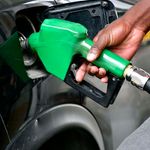
Foremost among the concerns is the risk of fuel price manipulation. Since the fuel levy becomes a critical source of debt servicing, the government may be tempted to adjust fuel prices not in response to market dynamics, but to meet repayment obligations.
This could lead to artificial inflation in fuel costs, undermining affordability for ordinary citizens. The regressive impact is stark: the burden falls hardest on low-income households who rely on public transport or kerosene for daily needs.
In this scenario, fuel ceases to be a public good and becomes a fiscal lever—its price shaped not by supply and demand, but by debt covenants and investor expectations.
Moreover, securitisation introduces a layer of fiscal opacity. These instruments often exist outside the formal budget process and may not appear in headline public debt figures. As a result, Kenya’s true debt exposure becomes difficult to assess.
Parliamentary oversight is further constrained by the technical complexity of the instruments, which can stifle meaningful scrutiny. The International Monetary Fund (2019) has warned that such arrangements, if not carefully managed, can reduce fiscal flexibility for future governments, especially during emergencies or downturns.
The ethical dilemma is clear: is it justifiable to commodify an essential good such as fuel to attract private capital? Should access to a basic commodity be governed by financial engineering imperatives?
Securitisation risks entrenching a model where public goods are transformed into speculative assets, prioritising investor returns over citizen welfare. It also raises broader concerns about equity, transparency, and the role of the state in safeguarding public interests.
This fiscal approach also reveals deeper structural patterns common in postcolonial African states—where short-term liquidity solutions are preferred over long-term developmental planning.
To mitigate these risks, several policy safeguards are necessary. First, legal protections must be enacted to prevent essential goods such as fuel from being used as collateral in speculative financing schemes.
Second, all securitisation deals should be disclosed in full, including their terms, repayment schedules, and socioeconomic impact assessments. Third, parliamentary oversight—especially by the Budget and Appropriations Committee—must be strengthened to ensure transparency.
Kenya should also consider alternative financing models, such as public-private partnerships with local content requirements and technology transfer, to reduce overreliance on debt-based instruments.
In the end, infrastructure development cannot be divorced from its social and ethical dimensions. Kenya must build not only roads, but also a fiscal model that upholds transparency, equity, and long-term sustainability. Securitisation may offer speed—but only a people-centered approach can deliver justice.
Unlock a world of exclusive content today!Unlock a world of exclusive content today!