Recent reports that the government had securitised fuel levies raises questions about the legality of Kenya’s public finance management.
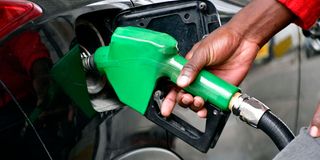
The Kenya Roads Board (KRB) has confirmed that it has securitised Sh7 out of every Sh25 per litre from the Road Maintenance Levy Fund for the next decade.
This arrangement transforms what should be a straightforward infrastructure financing mechanism into a complex legal and constitutional issue that demands urgent scrutiny.
The KRB’s securitisation rests on Section 32A(2) of the Kenya Roads Board Act, which allows it to ‘set aside a portion of the fund for purposes of securing additional funding’ with dual Cabinet secretary approval. On paper, this might seem adequate.
In practice, it represents a dangerous circumvention of constitutional safeguards.
Article 211 of the Constitution empowers Parliament to prescribe terms for national government borrowing, while Article 212 requires county government borrowing to have national government guarantees and county assembly approval.
Article 201 establishes principles requiring parliamentary oversight of public finance.
The KRB’s unilateral commitment of future revenue streams through special purpose vehicles creates binding fiscal obligations without demonstrable parliamentary oversight. This is exactly what these constitutional provisions were created to prevent.
The technical structure reveals the problem’s magnitude. By establishing SPVs to bundle and sell future revenue streams, the arrangement creates ‘off-balance-sheet’ obligations that evade traditional debt monitoring mechanisms.
This potentially circumvents Section 50(6) of the Public Finance Management Act, which provides that public debt shall be a charge on the Consolidated Fund unless otherwise determined by regulations approved by Parliament.
This arrangement is particularly troubling because it skirts democratic accountability.
By committing a decade of fuel levy revenues to investors, the current administration has effectively constrained future governments’ policy autonomy over infrastructure funding without legislative oversight. This violates the constitutional principle of intergenerational equity under Article 201(c), which requires that ‘burdens and benefits of public borrowing shall be shared equitably between present and future generations.’
Future parliaments lose meaningful discretion over road funding priorities, as investor claims take precedence over evolving public needs.
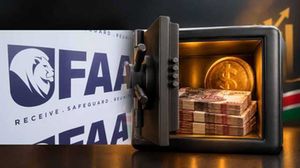
Every shilling of that Sh7 per litre now belongs to bondholders, not the Kenyan public. The KRB is also acting beyond its legal authority.
Section 6(2)(a) states that the KRB exists to coordinate optimal fund utilisation for road programmes, while Section 31(2)(a) specifies that the kitty consists of proceeds from the Road Maintenance Levy Fund, resources that have specific statutory designation.
The KRB Act contains no explicit authority to repurpose these dedicated funds through securitisation structures or create private sector claims against public resources. In my view, the statutory framework reveals fundamental gaps: no explicit authority for SPV creation, no framework for securities issuance, and no specific provision for pledging future revenue streams as collateral.
The legal validity depends on regulatory interpretation of ‘securing additional funding’, which is a deliberately broad language that appears insufficient for comprehensive securitisation authority.
The arrangement potentially violates Section 49 of the PFM Act, which requires that national government borrowing be ‘in accordance with the fiscal responsibility principles and the financial objectives set out in the most recent Budget Policy Statement.’ Additionally, it may circumvent Section 50(6)’s requirement that public debt be a charge on the Consolidated Fund unless otherwise determined by regulations approved by Parliament.
If the KRB securitisation model survives legal challenge, it establishes a catastrophic template for systematic revenue stream monetisation across government agencies.
This precedent privatises public revenue collection while maintaining government service delivery liability. It opens the door for further securitisation of other revenue streams, potentially creating a cascade of mortgaged public assets.
The KRB move reveals that Kenya’s public finance legal framework contains dangerous gaps that enable constitutional violations through creative interpretation. While Section 32A(2) provides procedural framework, it lacks sufficient substantive authority for comprehensive securitisation, creating legal vulnerabilities that this administration has exploited.
The arrangement represents potential constitutional violations requiring urgent judicial intervention. Every fuel pump has indeed become a debt collection point, not for the Kenyan public, but for bondholders who now hold claims against our infrastructural future.
Dr Latif is a lecturer and-co-founder and co-chair of the Committee on Fiscal Studies at the University of Nairobi
Unlock a world of exclusive content today!Unlock a world of exclusive content today!