A State-appointed team has proposed that Saccos set aside part of their membership and product fees to financially support the troubled umbrella Kenya Union of Savings and Credit Co-operatives (Kuscco), which is struggling to sustain its advocacy role.
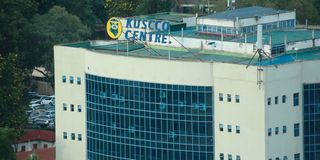
Kuscco, which is still reeling from a Sh13.3billion financial scandal linked to some of its former officials, is under pressure following governance failures and financial mismanagement, which weakened its balance sheet, raising concerns about its ability to support the growth of the cooperative movement.
Under the new proposal, part of the income that Saccos generate from membership fees and financial services would be pooled and redirected to support sector-wide institutions, including Kuscco, rather than the apex body relying solely on direct levies charged to member societies.
Delegates attending a past Kenya Union of Savings and Credit Co-operatives (Kuscco) Limited Annual General Meeting at Hilton hotel in Nairobi on May 28, 2021.
Photo credit: File | Nation Media Group
“To ensure the long-term sustainability and inclusivity of shared services, a diversified revenue model is essential. Income generated from sacco membership fees and the sale of financial products and services should not only cover operational costs but also be reinvested to strengthen the broader sacco ecosystem,” the committee said in its report.
“In this context, Kuscco, as Kenya’s national sacco federation, is a critical partner and could be supported financially, through the revenue model, to cover its costs for supporting saccos to enter and remain in the scheme.”
Kuscco, which sits at the apex of a movement controlling trillions of shillings in member savings, has in recent months become a source of systemic concern after investigations last year revealed governance failures and liquidity stress at the federation, triggering regulatory scrutiny and eroding member confidence.
For saccos, the crisis raised questions on whether affiliation fees and share subscriptions were effectively financing lasting sector support.
Revenue stream
Saccos currently pay Kuscco an affiliation fee of Sh1,000 and are required to buy at least 100 shares worth Sh10,000, creating a revenue stream that the government-assembled panel says could be better structured.
The committee sees this funding structure as both narrow and fragile, particularly as Kuscco is expected to play an expanded role in upcoming sector reforms.
These reforms include the rollout of shared services, a Central Liquidity Fund, and a Credit Union Service Organisation, all of which the committee notes demand stronger coordination and compliance oversight.
“By supporting Kuscco through targeted revenue allocations, Sacco Central reinforces the principle of co-operative solidarity and ensures that sector transformation is not only efficient, but equitable and scalable,” reads the report.
“This partnership model strengthens the delivery of shared services, accelerates reform implementation, and builds trust across all Sacco tiers.”
However, the report stresses that the financial support should not be unconditional, in a subtle response to criticism that past funding lacked accountability.
It proposes that revenue allocations to Kuscco be targeted at specific functions, including compliance support, onboarding of saccos into shared services, and audit readiness.