Geneva and New York top Kenya’s planned Sh2.1 billion spending on diplomatic properties abroad for the financial year beginning July, underscoring the high cost of maintaining missions in foreign countries and Nairobi’s bid to tame runaway rental costs.

Budget projections from the State Department for Foreign Affairs show that the largest share of the spending, subject to approval by the National Assembly, will be channelled to the chanceries and ambassadorial residences in the two cities.
The planned allocations indicate that high property prices and strategic diplomatic interests continue to shape government investment decisions.
Ongoing purchase of the Ambassador’s Residence in Geneva is set to receive the single largest allocation at Sh354.2 million in the fiscal year 2026/27. The estimates, however, fall short of the Sh500 million the Foreign Affairs department had asked for the year in review. This highlights the scale of a project whose estimated cost on completion in June 2028 stands at Sh2.5 billion.
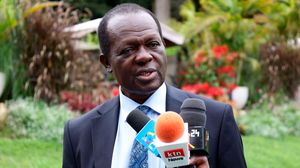
Prime Cabinet Secretary and Cabinet Secretary for Foreign and Diaspora Affairs Musalia Mudavadi.
“The purchase of the Ambassador’s Residence is ongoing, mainly due to Geneva’s high costs as a prominent multilateral station,” the Foreign Affairs department explains in its budget remarks shared with the National Treasury.
The proposed acquisition in Geneva towers above most other property-related expenditures planned across Kenya’s missions abroad, reflecting the realities of operating in a city ranked among Europe’s most expensive real estate markets.
The Swiss city hosts a dense concentration of United Nations agencies, international organisations, and global non-governmental bodies. Kenya’s mission there is central to negotiations on trade, health, climate, labour, and humanitarian affairs. The city hosts the headquarters of the United Nations Conference on Trade and Development (Unctad), World Health Organisation (WHO), and International Labour Organisation (ILO), among other global organisations.
Across the Atlantic, the proposed allocation towards diplomatic properties in New York emerges as Kenya’s second major cost driver. The budget sets aside Sh200 million for the renovation and redevelopment of the Ambassador’s Residence next financial year ending in June 2027. The Foreign Affairs department says the residence in New York, previously condemned, is being demolished and reconstructed at an estimated completion cost of Sh800 million by June 2028.
“The current Ambassador’s Residence was condemned and needs to be demolished and redeveloped to create owned staff houses and reduce rental costs. The redevelopment will be done through PPP,” the department states.
Easing fiscal pressure
Unlike Geneva’s outright purchase, New York’s project will be delivered through a public–private partnership (PPP) framework, reflecting a growing government preference for alternative financing models amid its tight financial position. The PPP approach is intended to ease immediate fiscal pressure while delivering modern facilities and reducing long-term leasing costs for staff accommodation in one of the world’s most expensive cities.
New York is home to the United Nations headquarters, making Kenya’s presence there strategically indispensable. Diplomatic accommodation commands premium rents, and ageing government-owned properties like Kenya’s can quickly become liabilities.
Kenya’s planned heavy investment in properties in Geneva and New York in a single year comes against long-standing concerns raised by oversight institutions about the sustainability and the cost-effectiveness of the country’s foreign property strategy.
Auditor-General Nancy Gathungu, in her report for the financial year ended June 2023, warned that Kenya’s diplomatic property strategy has been undermined by a lack of ownership and insufficient maintenance funding.
“Most missions do not own properties, hence end up leasing. Rents and leases account for approximately 20 per cent of the total budget in Kenya Missions abroad. In addition, inadequate funding for maintenance and repairs of government-owned properties abroad resulted in gradual dilapidation of these properties and the need for redevelopment,” Ms Gathungu said.
The ongoing investments appear to reflect an attempt by the government to address some of those structural weaknesses by prioritising ownership and major refurbishment of key diplomatic assets.
The 2026/27 budget proposals spread allocations across a wide network of missions, most targeting renovations, repairs, and completion of ongoing works.
In Mogadishu (Somalia), Sh49.8 million has been allocated for the ongoing construction of an office block nearing completion. Islamabad in Pakistan— the largest buyer of Kenya’s tea — will receive Sh65 million for the renovation of the chancery and Ambassador’s Residence, works linked to deterioration from harsh climatic conditions.
Italy’s Rome is earmarked for Sh25.5 million to complete pending upgrades at the Kenya Ambassador’s Residence following earlier improvements.
“Main renovation works such as the gas system overhaul, carpark shed construction, security enhancements, and ground improvements were finalised earlier. Pending works include modernising the kitchen and rehabilitating the external drainage system,” the department says.
Kenya’s mission in Pretoria is set to be allocated Sh10 million to fund furnishing and installations, which include solar systems and CCTV, after the construction of the Ambassador’s Residence was finalised, the report shows. The mission in The Hague, on the other hand, will receive Sh45 million for roof repairs and painting, while Paris has been allocated Sh50 million for structural repairs after inspections revealed cracks and leaks at the chancery.
Dar es Salaam is set to receive Sh100.5 million for further repairs following defects identified after earlier renovations. The allocation also supports preparations for Kenya’s eventual diplomatic relocation to Dodoma, Tanzania’s administrative capital.
“Further budgetary allocation is required to fence a plot that the Government of Kenya has been allocated in Dodoma, where missions are expected to relocate in the coming years,” Foreign Affairs officials explain in the budgetary proposal report.
Addis Ababa will receive Sh100 million for renovations and alterations at the chancery and refurbishment of residential units, though the funding requirement for the current fiscal year is indicated as Sh200 million. Lusaka’s government-owned properties have been allocated an estimated Sh250 million for redevelopment and renovation, while Kinshasa is earmarked for Sh150 million toward refurbishment and water infrastructure upgrades.
Elsewhere, Brussels will receive Sh150 million for renovation of the Ambassador’s Residence, Juba Sh250 million for fencing and construction of diplomatic facilities.
Travellers arriving at Juba Airport in Southern Sudan: The country seeks to open up its business environment.
Photo credit: File | NMG
Most projects extend across timelines running into 2027 and 2028, reflecting multi-year capital commitments that will continue shaping Kenya’s foreign affairs budget beyond the next fiscal cycle.
But as the government pushes ahead with acquisitions and refurbishments, Parliament and its advisory bodies have in the past questioned whether Kenya’s expansive diplomatic footprint is delivering value for money.
The Parliament Budget Office has urged policymakers to consider alternative models for expanding Kenya’s global reach at a lower cost.
“Honorary Consuls offer an efficient diplomatic channel of increasing a country’s diplomatic network as they are more cost-effective than fully-fledged missions because of the lower costs attached to maintaining Honorary Consuls as they serve for free and only require to be reimbursed expenses incurred in offering their services,” the PBO said in a November 2021 report.
The advisory unit also recommended hiring consulates and liaison officers in countries where Kenya lacks a full embassy, arguing that the approach could significantly cut overhead costs.
Efficiency concerns have also surfaced within the National Assembly, particularly regarding the performance of trade and commercial offices embedded within foreign missions. The National Assembly’s Departmental Committee on Trade, Industrialisation and Cooperatives has questioned whether trade missions are generating measurable economic returns.
“The committee noted that the offices of trade missions are not achieving value for money spent on sustaining them abroad. In addition, a huge share of the budgetary allocation is spent on allowances of the trade attaches,” the committee wrote in a 2024 report.
It warned that the offices were “consuming resources without generating measurable returns such as getting new markets for Kenyan exports”.
Follow our WhatsApp channel for the latest business and markets updates.