Court rejects fresh bid to halt leases of public sugar mills

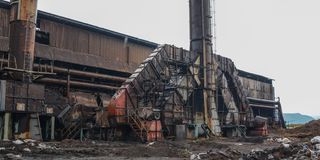
Dilapidated facilities and stalled machinery at Chemelil Sugar Factory on June 17, 2025.

Photo credit: Alex Odhiambo | Nation Media Group


The High Court has rejected a fresh attempt to stop the leasing of five State-owned sugar factories to private investors.

The court declined to issue conservatory orders that would have frozen the government’s shift from a 2015 privatisation model to a 2023/2024 leasing framework. It ruled that the orders sought were final in nature and could not be granted at an interim stage.

The petition was filed by Johannes Odhiambo Swa Makaduol, who sued President William Ruto, the Agriculture Cabinet Secretary Mutahi Kagwe, the National Assembly, the Attorney- General Dorcas Oduor, the Privatisation Authority, and the Agriculture and Food Authority.

He argued that the respondents had “arbitrarily crafted, developed, designed and rushed to adopt” the new leasing policy by restructuring and commercialising the sugar companies in Nyanza and Western Kenya without mandatory public consultations.

The State-owned sugar factories were leased to private operators last year under 30-year deals aimed at reviving the ailing industry and attracting fresh capital after years of debt, inefficiency, and unpaid dues.

Nzoia Sugar Company was handed to West Kenya Sugar Company Ltd, Chemelil Sugar Company to Kibos Sugar & Allied Industries Ltd, Sony Sugar Company to Busia Sugar Industry Ltd, and Muhoroni Sugar Company to West Valley Sugar Company Ltd.

Under the agreements, investors will pay annual land rent of about Sh40,000 per hectare for Chemelil, Muhoroni, and Sony and Sh45,000 per hectare for Nzoia, plus concession fees of Sh4,000 per tonne of sugar and Sh3,000 per tonne of molasses and a first-year goodwill payment.

Lessees are committed to investing over Sh12.2 billion in rehabilitation, modernization, and cane development to restore operations and protect farmers’ livelihoods. The government says leasing will unlock private capital, improve efficiency, and keep public ownership intact while shifting the State’s role to oversight.

However, the petitioner claimed that the 2015 Parliament-approved privatisation model “remains the only lawful and valid restructuring and commercializing sugar sector policy” and had never been amended or repealed, rendering the leasing model unconstitutional.

Stakeholder consultation 

He sought declarations that the respondents acted outside the law, an order quashing the leasing policy in its entirety, and a directive compelling the State to revert to the 2015 model.

“The purported extensive public participation, including the one allegedly conducted at Kisumu alone, was invalid because it was just a mere few selected politically correct persons, who were invited to hold stakeholder consultation not public participation meeting as claimed by the respondent,” said the petitioner.

The State opposed the application. The attorney-general argued that the leasing of the public sugar companies was undertaken in compliance with the Constitution and the law.

 “The leasing of the public sugar companies was undertaken strictly in compliance with the

Constitution, the statute, and established public procedures,” said the AG.

The government maintained that Parliament formally vacated the 2015 privatisation model and subsequently approved leasing for the five factories.

It said a certificate issued in September 2024 conclusively validated the leasing process and dismissed claims to the contrary as “misleading, unfounded, and legally untenable.”

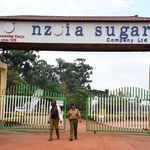
The entrance to Nzoia Sugar Factory in Bungoma County.

Photo credit: File | Nation Media Group

The respondents further argued that public participation had been conducted and that similar issues had been determined in earlier litigation.

They described the fresh application as a re-litigation and an abuse of the court process.

However, in its analysis, after comparing the present application with previous judgments, the court found that the issues were not identical.

“In the previous case, what was being challenged was the process of leasing the sugar factories. In the present case, the petitioner is challenging the policy shift from the previous 2015 model to a new 2023–2024 leasing model,” the court observed.

The court held that the question of the policy shift and its constitutionality had not been directly addressed in the earlier case.

But the court declined to grant the conservatory orders sought after finding that the reliefs listed in the application were similar to those sought in the main Petition. It said granting them would determine the dispute with finality before a full hearing.

“The objective of conservatory orders is to preserve the subject matter of a suit pending the main trial,” the court stated, adding that issuing the orders would render the petition moot without scrutiny of the contested documents and constitutional questions.

The application dated November 28, 2025, was therefore struck out, and the court directed parties to focus on the substantive petition. The petition, which is centered on the issue of policy shift, comes against the backdrop of failed previous attempts to challenge the leasing program through the courts.

The leasing of State-owned sugar mills has been a flashpoint in Kenya’s long-running efforts to revive the agricultural sub-sector, weighed down by debt, ageing infrastructure, and chronic mismanagement.

Successive governments have attempted privatization, restructuring, and strategic partnerships to stem losses and restore competitiveness.

The current leasing model targets five factories in the sugar belt of Nyanza and Western Kenya.

The government argues that private operators will inject capital, improve efficiency, and safeguard farmers’ livelihoods. The petitioner in the present case says the policy shift risks sidelining stakeholders and lacks transparency.

Follow our WhatsApp channel for the latest business and markets updates.


PAYE Tax Calculator

Note: The results are not exact but very close to the actual.