Time flies with great content! Renew in to keep enjoying all our premium content.
Prime
Why Kileleshwa traded its leafy suburbs for high-rise apartments
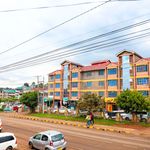
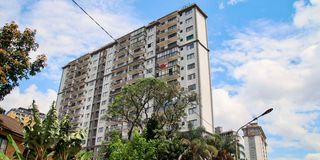
Residential apartment blocks stand along a street in Kileleshwa, Nairobi, on May 21, 2026, highlighting the area’s rapid urban growth and increasing high-rise developments. Wilfred Nyangaresi | Nation
Photo credit: Wilfred Nyangaresi | Nation Media Group
In parts of Kileleshwa, the jacaranda blossoms still fall onto clay-tiled roofs, bringing back memories of old Nairobi. Low-rise apartment blocks sit behind mature jacarandas, their design reminiscent of a time when Kileleshwa was calm and mostly residential.
But turn a corner, and that image disappears. You step into a whole new world of high-rise apartments with flat roofs, stacked floor after floor, with rooftop swimming pools and gyms, and short-stay listings advertised from nearly every entrance.
When John Maina moved into Kileleshwa in December 2001, the neighbourhood was quiet, spacious and deeply residential. He had just retired from banking and settled in Kileleshwa after his wife, who was then a civil servant, was offered the chance to buy a government house in the area. The couple acquired a one-acre property with a two-storey home for Sh3.2 million.
Today, that figure feels almost unimaginable, especially in one of Nairobi's most expensive residential estates.“We were lucky. The government was selling some of its houses, and we seized the opportunity,” says Mr Maina.
Back then, Kileleshwa was defined by trees, silence and space. Roads curved through large plots of land, and apartment buildings rarely rose beyond two to four storeys. Many homes belonged to government agencies, banks and senior civil servants.
University professors and middle-class families lived here to be close to the city, but away from the chaos of downtown Nairobi.
Plots measured between three-quarters and a full acre. Shopping meant driving to Westlands, Kilimani or Lavington, as Kileleshwa itself had little commercial activity.
The turning point came with a policy change. When zoning regulations were revised to allow higher plot ratios and taller residential developments, developers moved in quickly.
“Once the zoning changed, many high-rise buildings started to appear. That is when the area began to change very quickly,” says Maina. Most of the old houses were demolished to make way for apartment blocks, which now stand shoulder-to-shoulder where single-family homes once stood.
“My home hasn't changed much, but the environment around us has deteriorated because we are now competing for scarce resources,” says Mr Maina.
The roads, sewer systems, and water supply came under pressure. Boreholes multiplied as residents struggled with unreliable access to water.
“The streams that used to be clean are no longer the same, and there are boreholes everywhere,” he says.
Traffic congestion became the norm, even though connectivity to Westlands, Kilimani, Valley Arcade and the city centre improved.
“Sometimes it takes almost an hour to drive from Museum Hill to the provincial police headquarters because of traffic,” he says. Despite the strain on infrastructure, young professionals continued to flock to the estate, drawn by apartment living and proximity to business districts.
Restaurants, nightlife venues, supermarkets and private kindergartens followed. However, Mr Maina notes that social amenities have not expanded at the same pace as residential developments: "We have seen a few clinics and more nursery schools, but major schools and hospitals have not really increased."
Residential apartments and commercial buildings in Kileleshwa, Nairobi, on May 21, 2026, highlighting the area’s rapid urban growth and rising high-rise developments.
Photo credit: Wilfred Nyangaresi | Nation Media Group
Following the population influx, property values have soared. The one-acre home that Mr Maina bought for Sh3.2 million has attracted offers running into tens of millions.
“I believe that when we decide to sell our property, it could go for around Sh70 million,” he says.
Good bargain
Wangethi Mwangi recalls an earlier Kileleshwa. In 1994, he acquired a three-bedroom bungalow on a three-quarter-acre plot that had previously been owned by Nation Printing and Publishing Limited, which is now the Nation Media Group.
"The company was disposing of some of its residential properties," he recalls.
The bungalow, which had been occupied by an Australian editor, was sold for Sh3.5 million; the expiring lease, registered in 1902, had affected its value.
"The lease was due to expire in a few years, so that affected the value," Mr Mwangi says.
Years later, he redeveloped the property into a high-rise apartment complex.
“We have literally watched the neighbourhood change around us. We have seen the roads being expanded, buildings going up everywhere, and congestion building up over time,” he says.
Today, balconies overlook concrete towers stretching from wall to wall. Petrol stations, supermarkets, and cafés now dominate the roads that were once lined with family homes.
Another resident, who requested anonymity, said that he moved to Kileleshwa in 1978, at a time when the area was dominated by large, standalone homes on expansive plots of land, most of which measured between three-quarters and one acre.
"At that time, it was mostly houses and gardens. You could drive through the estate and barely see any apartments. There wasn't a shopping centre anywhere near here. People had to drive far for simple services.”
Seeing a gap, he developed one of the area's earliest commercial centres in 1997, and over the years, he has developed his property to keep up with the growing population's rising demands, which is perhaps what has kept it running in the midst of the area's fast-paced development.
According to the businessman, Kileleshwa’s rapid transformation began around 2005, when zoning regulations changed.
"The by-laws changed and opened the area up to high-rise buildings," he says.
He describes the growth as largely positive, citing improved road infrastructure, better lighting, enhanced security, and easier access to the city centre.
A potholed section of a road in Kileleshwa, Nairobi, on May 21, 2026, highlighting infrastructure challenges amid rapid urban growth in the area. Wilfred Nyangaresi | Nation
Photo credit: Wilfred Nyangaresi | Nation Media Group
“Kileleshwa is one of the residential areas closest to the city, and accessibility has improved significantly thanks to the roads,” he says.
He also mentions the infrastructure upgrades, such as sewer connections and new roads, which have improved living standards compared to earlier years, when many homes relied on septic systems.
However, he acknowledges that the rapid urbanisation has also brought challenges. Like many other residents, he complains of traffic congestion, water shortages and pressure on utilities.
“The biggest problem now is water. Many properties rely on boreholes because the supply is inconsistent,” he says.
Rise of Airbnbs
Kileleshwa’s transformation is visible not only in concrete, but also in how people live. The suburb has become a hybrid of long-term rentals and short-stay apartments, with Airbnb-style units expanding rapidly. These fully furnished apartments are marketed as lifestyle products and feature amenities such as rooftop pools, gyms, smart locks and concierge services.
According to data from the Kenya Property Centre, the average monthly rent for an apartment in Kileleshwa in 2026 is about Sh120,000, depending on size and furnishings. One-bedroom units can range from Sh40,000 to Sh79,000, while high-end three-bedroom apartments can exceed Sh150,000.