The government has reduced its investment in housing levy collections in Treasury bills, signalling improved absorption of funds in the ongoing construction of State-backed homes for low- and middle-income households, valued at approximately Sh500 billion.
Fresh data from the Economic Survey 2026 shows that absorption of funds from housing levy collections surged to 96.3 percent of the Sh79.03 billion budget in the financial year ended June 2025, compared to 32.6 percent of Sh78.18 billion the previous year.
Actual spending on housing more than tripled to Sh79.03 billion in the year under review, up from Sh25.49 billion in the previous year, the Economic Survey 2026 shows.
The spending on housing projects has climbed even more steeply from Sh9.13 billion in the 2022/23 financial year, before the housing levy — deducted at the rate of 1.5 percent of monthly pay slips and matched by employers — took effect from July 2023.
“During the review period, expenditure on housing increased significantly, reflecting improved absorption of allocated funds and scaling up of affordable housing projects,” the KNBS writes in the Economic Survey notes, pointing to stronger execution capacity within the State Department for Housing and Urban Planning.
Reports from the Affordable Housing Board had previously shown that nearly half of the housing levy collections were not immediately deployed to projects despite being ring-fenced.
Tens of billions of shillings left unspent were temporarily invested in Treasury bills — interest-earning government securities that mature between three and 12 months.
“It is not prudent, even as a government, to have money sitting, lying idle in an account. The money is safe, fully invested in government securities, and the accounts we are operating are CBK accounts, which have full sight of the government on every expenditure,” the Affordable Housing Board acting chief executive, Sheila Waweru, said in an interview earlier.
“So we can put the money in Treasury bills as a manager of the [affordable housing] fund, and it brings in additional money, say Sh2 billion, and that enables us to put up more units, which we will not do if the cash were staying in an account idly. This is a measure for prudent management of the fund.”
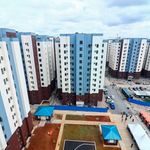
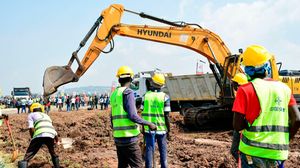
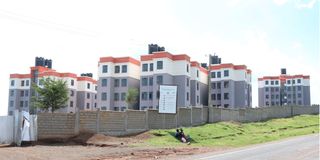
The stepped-up spending is feeding into the largest State-backed construction drives in Kenya’s history, with more than 205,000 housing units under development across the country at an estimated value of nearly Sh500 billion as of December 2025.
The bulk of these fall under the Affordable Housing Programme, where 138,474 units are under construction with a value of Sh385.83 billion.
Social housing projects had a pipeline of 53,350 units with an estimated construction cost of Sh81.8 billion, while institutional housing projects comprised 12,709 units with an estimated cost of Sh28.6 billion.
The remaining 778 housing units under construction are being done by the National Housing Corporation for Sh3.7 billion.
“Budgetary allocations to the housing sector continued to rise, supporting ongoing construction and expansion of the housing stock,” the Survey states, linking higher spending directly to increased project activity on the ground.
The ramp-up comes against a backdrop of strong inflows into the housing fund. The Kenya Revenue Authority collected Sh73.2 billion from the levy in the 2024/25 financial year, exceeding the National Treasury’s projection of Sh63.2 billion.
This added to the Sh54.16 billion collected in the levy’s first year, despite a three-month suspension following a court ruling that initially declared the deductions unconstitutional because it applied only to workers in formal employment, thereby creating unequal principles under Employment law.
The legal setback prompted Parliament to pass the Affordable Housing Act, 2024, allowing collections to resume from March 2024 under an expanded framework that includes workers in the informal sector, and reinforcing the government’s commitment to the programme.
The earlier accumulation of idle funds highlighted structural bottlenecks in project rollout. Construction projects typically take time to design, procure, and execute, meaning inflows initially outpaced spending.
This led to at least a third of the proceeds previously being invested in Treasury bills with maturities of between three and 12 months.
The latest data suggests that the gap is narrowing as implementation gathers pace, with the State moving more aggressively to convert levy collections into physical housing units.